
Our wines
Vins de Bandol
Pibarnon
OUR EMBLEMATIC WINES
Wines that have inspired us for over 40 years
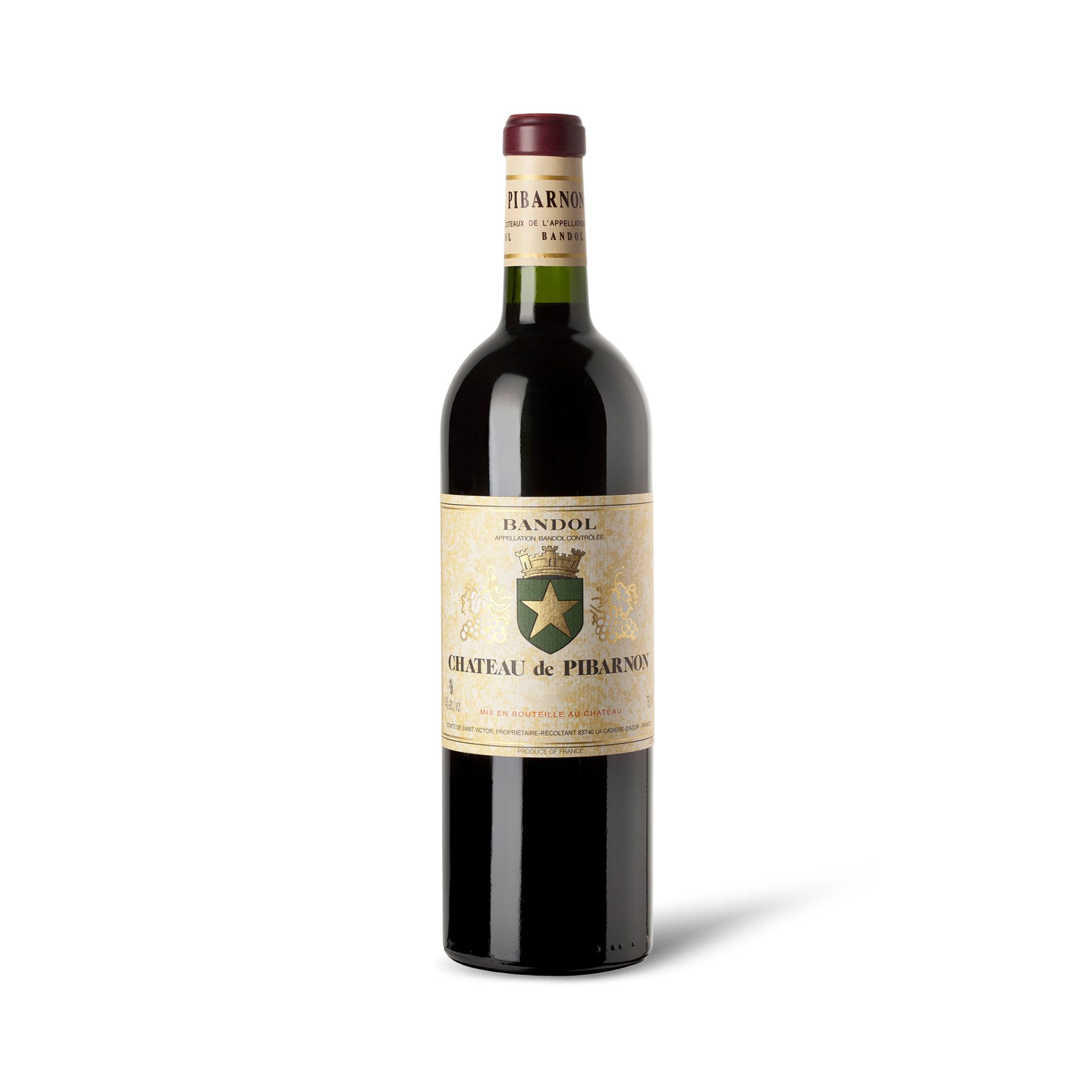 AOC BANDOL
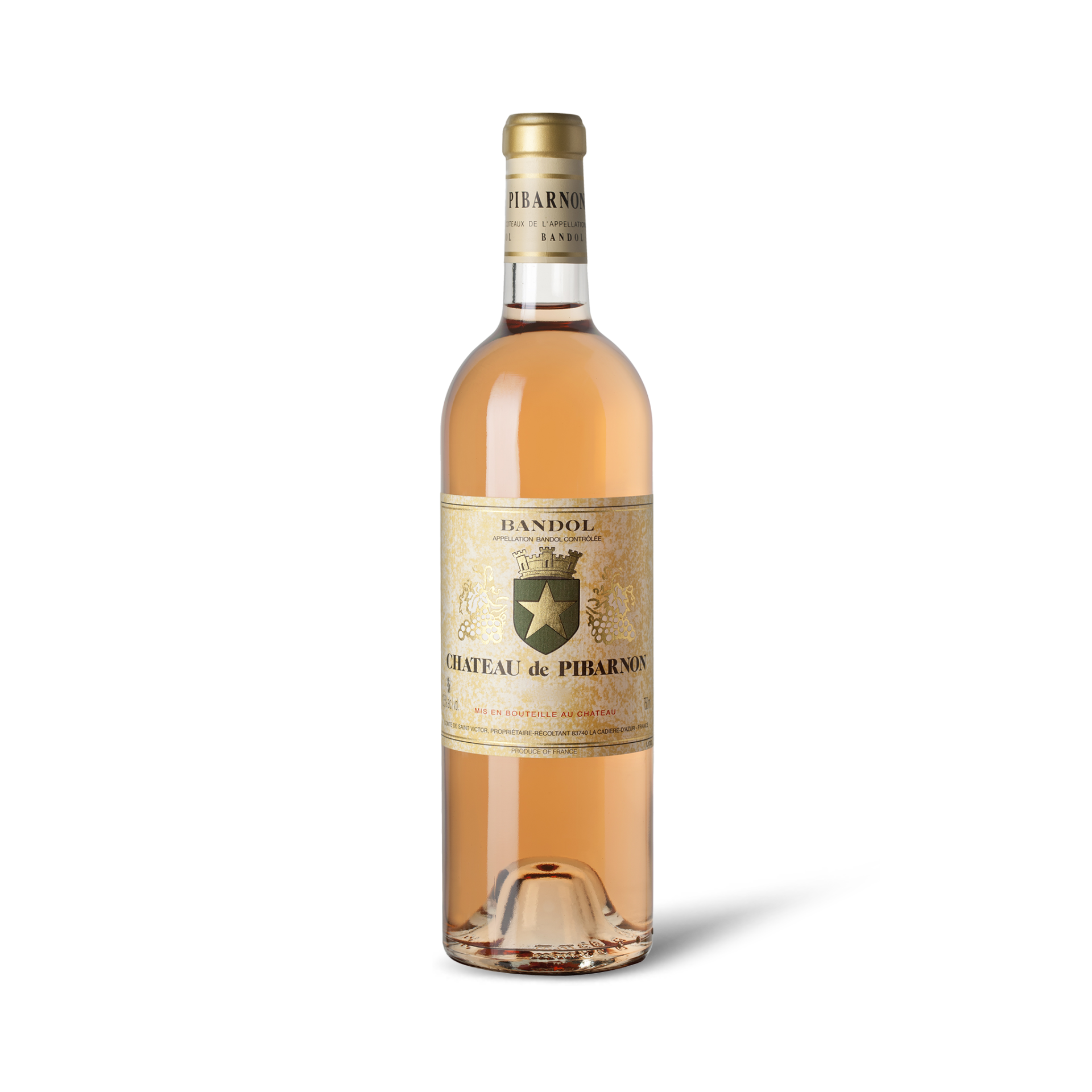 AOC BANDOL
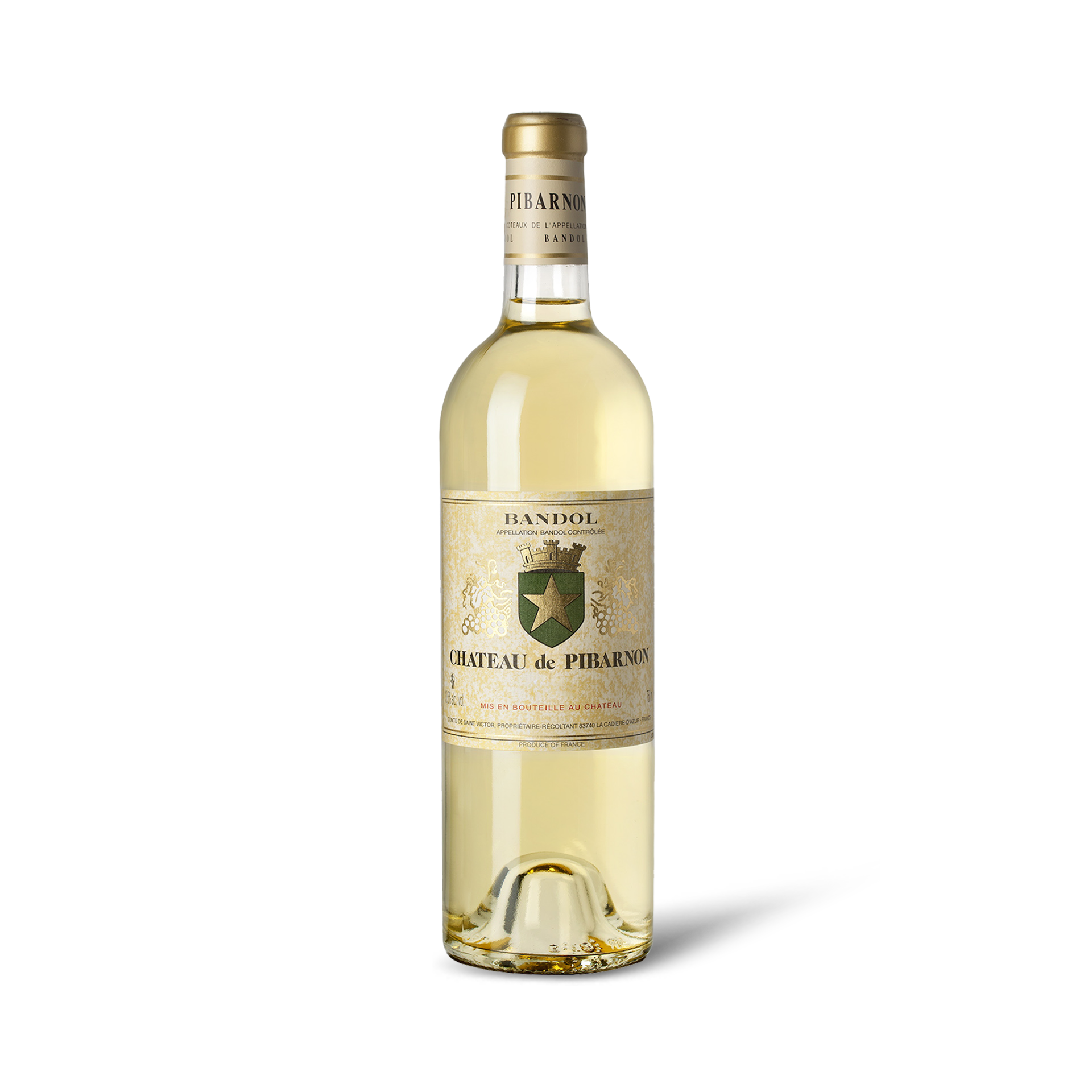 AOC Bandol
2025
The 2025 red is, like its elder brothers, full and ample, airy and with a certain density, with a precise, fine interplay of textures. A wine for laying down, sleeping for now beneath the looks of a young leading man. Ageing will once again be decisive, but always handled with restraint and neutrality, without leaving any imprint.
It is all elegance, with a great deal of fruit and lovely depth.
Later, much later, it will love the great classics: all meats, cooked rare, with their juices and a few herbs (sage, rosemary).
It will need blood! Favour grilled meats, cooked blue.
Hand-picked, gravity-fed throughout. Surface area: 25 ha of terraces, on high hillsides. Yields: 23 hl/ha. Organic growing (certified in 2019) with some biodynamic principles (working the soil, infusions, 500 preparations, exploring essential oils).
90 % mourvèdre - 10 % grenache
The high altitude of the plots gives us cool nights and slow ripening of the grapes. The Château de Pibarnon vineyard is planted on very old Triassic soil with a very high limestone content. This limestone encourages the bouquet to develop in the wines, and allows very fine, elegant tannins to be extracted. It is also what gives rise to the freshness and minerality, lending the wines an exemplary breeding and flavour. Château de Pibarnon is built around 12 main plots, all of them on the heights of the estate: Bel Air, Jourdan, Pointes-Blanches, le Cirque…
As in the vineyard, the fermentations called for a great deal of patience: the tannins are extracted slowly and deeply, by infusion-diffusion, after long days of gentle punching down. Fermentation is followed by a few days of maceration before running off and transfer to large oak casks for ageing. Ageing will be long (22 months) in these magnificent casks, from the finest cooperages in Europe.
Once again, autumn was as wet as spring, and the vines made the most of this windfall to grow quietly and prepare fine grapes for the 2025 harvest. Anyone who came here this summer will no doubt remember a fairly mild season, with no excess of mistral or sirocco. We thought the picking would start a little late, but in the end we began on 21 August and finished in mid-September, ahead of very heavy rain that soaked the soil and not the bunches, already harvested. Yields are in line with recent years, which is to say rather low, but the quality of the berries is such that the sorting table serves no purpose, other than to rest a few glasses on during the break… Needless to say the vinifications were straightforward, the wines fermented perfectly, the vats were emptied one after another, and the vintage quickly began to show its style.
2024
The 2024 red is, like its elder brothers, full and ample, airy and with a certain density, with a precise, fine interplay of textures. We believe we have found a direction for this colour that we like more and more: a certain stripping back that keeps only the essential, so that the wine is energetic, luminous and ample, while offering a proper sensuality. Ageing will once again be decisive, but always handled with restraint and neutrality (it is far more digestible than barrel ageing).
Later, much later, it will love the great classics: all meats, cooked rare, with their juices and a few herbs (sage, rosemary).
It will need blood! Favour grilled meats, cooked blue.
Hand-picked, gravity-fed throughout. Surface area: 25 ha of terraces, on high hillsides. Yields: 23 hl/ha. Organic growing (certified in 2019) with some biodynamic principles (working the soil, infusions, 500 preparations, exploring essential oils).
90 % mourvèdre - 10 % grenache
The high altitude of the plots gives us cool nights and slow ripening of the grapes. The Château de Pibarnon vineyard is planted on very old Triassic soil with a very high limestone content. This limestone encourages the bouquet to develop in the wines, and allows very fine, elegant tannins to be extracted. It is also what gives rise to the freshness and minerality, lending the wines an exemplary breeding and flavour. Château de Pibarnon is built around 12 main plots, all of them on the heights of the estate: Bel Air, Jourdan, Pointes-Blanches, le Cirque…
As in the vineyard, the fermentations called for a great deal of patience: the tannins are extracted slowly and deeply, by infusion-diffusion, after long days of gentle punching down. Fermentation is followed by a few days of maceration before running off and transfer to large oak casks for ageing. Ageing lasts 22 months in these magnificent casks, the latest of which has just arrived from the Italian Alto Adige, from our latest favourite, Mittelberger.
A year that began with little water between the 2023 harvest and Christmas, and continued with pruning starting in January and February, almost in a t-shirt… needless to say, these early signs did not reassure us. The autumn amendments (activated compost) stayed somewhat on the surface, unconsumed. Fortunately, the season returned fairly quickly to classic standards, first with a cold spell, and soon with a great deal of water throughout spring, reaching around 500 mm by mid-June. A few contact treatments later (powdered sulphur with very little copper) and above all horsetail and nettle infusions, and we could soon look towards the harvest with a certain serenity. The summer was far from being as treacherous or as mischievous as it can sometimes be: no sudden turns in the weather and a moderate heatwave (32°C in the shade, thanks to the nearby sea).
Phew! The vines made the most of this new lease of life to grow slowly with a fine leaf surface, and to settle towards a crop that looked correct, if low.
2022
The Château's 2022 Red reveals great balance from the moment it is opened. A complex, deep, spicy nose, edged with black fruit, hints at fine ripeness refreshed by lovely vegetal notes (garrigue, juniper, liquorice). On the palate, a sensation of fullness, volume and airy, caressing density gradually gives way to a finish that asserts itself with precision, through a delicate, saline fabric.
It is so young… All meats will be its preference, cooked rare, with their juices and a few herbs (sage, rosemary). It needs blood! Favour fine meats cooked blue, pigeon, or duck cooked in its own blood.
But it can already be drunk sparingly, after a long decanting that will stretch it out.
Hand-picked, gravity-fed throughout. Surface area: 25 ha of terraces, on high hillsides. Yields: 23 hl/ha. Organic growing (certified in 2019) with some biodynamic principles (working the soil, infusions, 500 preparations, exploring essential oils).
90 % mourvèdre - 10 % grenache
The high altitude of the plots means cool nights and slow ripening of the grapes. The Château de Pibarnon vineyard is planted on very old Triassic soil, characterised by a very high level of limestone. This limestone favours the development of bouquet in the wines, and allows the extraction of very fine, elegant tannins. It is also the source of the wine's freshness and minerality, giving it exemplary breed and flavour. Château de Pibarnon is made up of 12 main plots, all located on the heights of the estate: Bel Air, Jourdan, Pointes-Blanches, le Cirque...
As in the vineyard, the fermentations called for a great deal of patience: the tannins are extracted slowly, after long days of maceration and punching down. Fermentation is followed by a very long maceration (around 3 weeks) before running off. Aged in large oak casks for 20 months. The cask stock has been fully renewed. Working with a range of coopers and casks of different ages allows us to tailor the ageing of each of our terroirs as closely as possible, in the purest neutrality.
The 2022 vinifications came out of a somewhat capricious climate that sometimes went to extremes. Eric, the vineyard manager, and his team fine-tuned the plots one by one, observing, intervening as little as possible, caring for the soil as much as for the vines, to leave them a good deal of autonomy and a balance favourable to producing fine grapes in this dry year. The health of the vines was perfect, as you would expect, and we were saved by the small miracle of 16 August, a fine storm bringing more than 60 mm of rain. Phew! The vines benefited, and so did we, and it was with only a few grapes damaged by a little hail (which came with the storm) that we would soon begin the harvest with this incredible team.
Cumulative rainfall was very respectable up to the end of December 2021 (580 mm). But considering how light some of that rain was, the vines still endured a little over 7 months of drought.
Spring was fairly short, and summer began in the very first days of May, fortunately without excessive heat.
2021
The Château's 2021 Red draws you immediately into the liquorice-laced, nobly vegetal depth that Mourvèdre offers in its youth. The palate is sappy, fresh and long, with a lovely saline finish over fine, refreshing tannins. A year in bottle has done it a great deal of good (bottled in June 2023), and it is ready to open up and stretch out as spring shows its face.
It is so young… All meats will be its preference, cooked rare, with their juices and a few herbs (sage, rosemary). It needs blood! Favour grilled meats, cooked blue.
But it can already be drunk sparingly, after a long decanting that will stretch it out.
Hand-picked, gravity-fed throughout. Surface area: 25 ha of terraces, on high hillsides. Yields: 23 hl/ha. Organic growing (certified in 2019) with some biodynamic principles (working the soil, infusions, 500 preparations, exploring essential oils).
90 % mourvèdre - 10 % grenache
The high altitude of the plots means cool nights and slow ripening of the grapes. The Château de Pibarnon vineyard is planted on very old Triassic soil, characterised by a very high level of limestone. This limestone favours the development of bouquet in the wines, and allows the extraction of very fine, elegant tannins. It is also the source of the wine's freshness and minerality, giving it exemplary breed and flavour. Château de Pibarnon is made up of 12 main plots, all located on the heights of the estate: Bel Air, Jourdan, Pointes-Blanches, le Cirque...
As in the vineyard, the fermentations called for a great deal of patience: the tannins are extracted slowly, after long days of maceration and punching down. Fermentation is followed by a very long maceration (around 3 weeks) before running off. Aged in large oak casks for 20 months. The cask stock has been fully renewed. Working with a range of coopers and casks of different ages allows us to tailor the ageing of each of our terroirs as closely as possible, in the purest neutrality.
A year in line with those before it (except 2020). Rainfall was low but sufficient. As you know, relatively low rainfall means less vigorous growth, and therefore a more modest demand for water during the dry summer. Eric's management of the vineyard is bearing fruit in an increasingly visible way, and we finished the summer season with the prospect of harvesting nectar. The summer was not a scorching one. The thermometer did not exceed 31°C in the shade, and there was no sirocco or heat spike. Nothing stood in the way of a fine, relatively late-ripening harvest (the heart of the picking falls between 5 and 30 September), with competitive acidity levels, which bring low pH values (for the more discerning readers), a guarantee of tonus, longevity and energy.
2020
The Château Rouge 2020 is a model of balance on the palate, fresh, full-bodied and silky. It is still quite young, but already its boldness is palpable, its desire to open up tangible. Its finish, marked by a subtle return to liquorice, is a clear indication of its origin and harmonious development.
It is so young... But it is already drinkable sparingly, after a long decanting to lengthen it. It is best with all meats, cooked rare, with juices and a few herbs (sage, rosemary).
Harvested by hand and worked by gravity. Surface area: 25 hectares of terraced vineyards on high slopes. Yields: 29 hl/ha. Organic growing (certified in 2019) with some biodynamic principles (working the soil, infusions, 500 preparations, exploring essential oils).
90% MOURVEDRE - 10% GRENACHE
The high altitude of the plots means cool nights and slow ripening of the grapes. The Château de Pibarnon vineyard is planted on very old Triassic soil, characterised by a very high level of limestone. This limestone favours the development of bouquet in the wines, and allows the extraction of very fine, elegant tannins. It is also the source of the wine's freshness and minerality, giving it exemplary breed and flavour. Château de Pibarnon is made up of 12 main plots, all located on the heights of the estate: Bel Air, Jourdan, Pointes-Blanches, le Cirque...
As with the vines, the vatting required a great deal of patience, with the tannins slowly extracted after long days of maceration and punching down. Fermentation is followed by a very long vatting period (around 3 weeks) before the wine is run off. Aged in oak tuns for 20 months. The tuns are 100% renewed. Diversification in the choice of coopers and tuns of different ages enables us to best adapt the ageing process to each of our terroirs. Good diversification in the choice of coopers, striving for neutrality.
The growing season, which can be estimated to have started in October, at the end of the previous harvest, was perfect in every way. A deluge of water spread out until Christmas already announced 500 mm of rain, which is considerable and very useful for the soils. By the end of June 2020, rainfall had reached a record 1000mm. A real boost for these high-altitude terroirs, which are farmed biodynamically, and for all the microbial life in the soil. The growing conditions were excellent, and the plants well-balanced, despite a small amount of phytosanitary pressure (mildew and powdery mildew), which was quickly brought under control by light, targeted organic treatments, supplemented by herbal teas and trials of essential oils. All that remained was to carry out a small green harvest in July on certain plots to wait patiently for ripening and the start of the harvest.
2019
The 2019 Red is a luminous, conquering, flavoursome wine that is paradoxically very delicate despite its power. Its juicy, balanced tannins are stripped back and precise, without any excess. One of the best fabrics we've produced in a long time. Very precise, with just the right amount of cheekiness.
It is so young... But it is already drinkable sparingly, after a long decanting to lengthen it. It is best with all meats, cooked rare, with juices and a few herbs (sage, rosemary).
Hand-picked, very short cycle, gravity-fed. Surface area: 25 hectares of terraced vineyards on high slopes. Yields: 29 hl/ha. Organic growing (certified in 2019) with some biodynamic principles (working the soil, infusions, 500 preparations, exploring essential oils).
90 % MOURVÈDRE - 10 % GRENACHE
The high altitude of the plots means cool nights and slow ripening of the grapes. The Château de Pibarnon vineyard is planted on very old Triassic soil, characterised by a very high level of limestone. This limestone favours the development of bouquet in the wines, and allows the extraction of very fine, elegant tannins. It is also the source of the wine's freshness and minerality, giving it exemplary breed and flavour. Château de Pibarnon is made up of 12 main plots, all located on the heights of the estate: Bel Air, Jourdan, Pointes-Blanches, le Cirque...
Red 2019 marks a return to our roots. This year, we have vinified some of our reds in whole bunches (bunches not crushed, not destemmed), to obtain, not tannic power, oh no... Our wines are oriented towards finesse, as you know. The advantage of the stalk is that it brings minerality and freshness, which a vintage like this could have masked. The stalk comes into direct contact with the limestone, producing wines that are structured and full-bodied, but not muscular, with a delicate, sapid mouthfeel. When properly matured, it blends perfectly into this balanced structure, which becomes fuller and more precise, resulting in more luminous wines. Aged in oak tuns for 20 months. The tuns are 100% new. Diversification in the choice of coopers, a quest for neutrality.
2019 was a vintage to match your memories: the rain fell in abundance... but only from October to January! It's true that 550mm of rain fell on the soil. The health of the vineyards was exemplary, with very few treatments, very little action and little ploughing to prevent water evaporation. Little green growth, i.e. production adapted to the plant's capacity. Low yields. 2019 - the year of organic certification Although we had already been cultivating fully organically since 2004, we only began the certification process in 2016, with a view to obtaining it in 2019.
2018
The 2018 red is a deep, vertical and devilishly seductive wine. Usually bearing masculine characteristics, the Mourvèdre here takes on the air of a Pinot. A mix of red and black berries gradually reveals hints of limestone terroir, spices and garrigue. This wine is full-bodied and enjoys particularly tasty, vibrant and responsive tannins on the palate.
It is so young... But it can already be drunk sparingly, after a long decanting to lengthen it. It is best with all meats, cooked rare, with juices and a few herbs (sage, rosemary).
Hand-picked, very short cycle, gravity-fed. Surface area: 25 hectares of terraced vineyards on high slopes. Yields: 30 hl/ha.
90% MOURVEDRE - 10% GRENACHE
The vines dominate the valley, facing the sea, clinging from terraces to terraces, up to 300 metres above sea level, on these slopes forming a vast cirque sheltered from the Mistral wind. The high altitude of the vineyard means cool nights and slow ripening of the grapes. The Château de Pibarnon vineyard is planted on very old Triassic soil, characterised by a very high level of limestone. This limestone favours the development of bouquet in the wines, and allows the extraction of very fine, elegant tannins. It is also the source of the wine's freshness and minerality, giving it exemplary breed and flavour. Château de Pibarnon is made up of 12 main plots, all located on the heights of the estate: Bel Air, Jourdan, Pointes-Blanches, le Cirque...
As with the vines, the vatting required a great deal of patience, with the tannins slowly extracted after long days of maceration and punching down. Fermentation is followed by a very long vatting period (around 3 weeks) before the wine is run off. Aged in oak tuns for 20 months. The tuns are 100% renewed. Diversification in the choice of coopers and tuns of different ages enables us to best adapt the ageing process to each of our terroirs.
2018 was a year of intuition, finesse and balance. This vintage, marked by constant humidity in spring and early summer, allowed soil life to flourish, but also allowed mildew to develop. Rarely had we experienced such pressure. In the end, by deciding not to treat indiscriminately, we helped the vines to adapt and ripen their grapes. So very little copper was used, the soils were preserved and the vineyard defended itself to some extent, thanks to our biodynamic growing methods. We carried out a small green harvest to obtain optimum ripeness.
2017
The 2017 Red is a deep, broad wine of remarkable breadth. It is more akin to a Gothic cathedral than a Romanesque church, its finesse balancing the luminosity of its frame and silhouette. Its nose of black fruit and sweet spices is already seductive, but leave it in the cellar for it to assert its very high potential with grace and delight.
It is so young... But it is already drinkable sparingly, after a long decanting to lengthen it. It is best with all meats, cooked rare, with juices and a few herbs (sage, rosemary).
Handpicked grapes with a small team of pickers. This allows us to stretch out picking dates, to maximize the opportunity of harvesting each variety at its best moment of maturity. Strict selection in the vineyard and picking out of individual grapes bunches, if necessary. 30 hectoliters per hectare
90% MOURVEDRE - 10% GRENACHE
The vines dominate the valley, facing the sea, clinging from terraces to terraces, up to an altitude of 300 m, on these slopes forming a vast cirque sheltered from the Mistral wind. The high altitude of the vineyard means cool nights and slow ripening of the grapes. The Château de Pibarnon vineyard is planted on very old Triassic soil, characterised by a very high level of limestone. This limestone favours the development of bouquet in the wines, and allows the extraction of very fine, elegant tannins. It is also the source of the wine's freshness and minerality, giving it exemplary breed and flavour. Château de Pibarnon is made up of 12 main plots, all located on the heights of the estate: Bel Air, Jourdan, Pointes-Blanches, le Cirque...
As with the vines, the vatting required a great deal of patience, with the tannins slowly extracted after long days of maceration and punching down. Fermentation is followed by a very long vatting period (around 3 weeks) before the wine is run off. Aged in oak tuns for 20 months. The tuns are 100% renewed. Diversification in the choice of coopers and tuns of different ages enables us to best adapt the ageing process to each of our terroirs.
2017 is far from the archetypal hot vintage! It's the magic of the terroir, of course, but also of good water reserves, thanks to a very wet winter. The 500 mm of rainfall up to the end of April provided ample reserves to make up for the drought of 2016. Grape production was very moderate, with a low natural yield (around 30 hl per hectare, which is very low indeed), and the few bunches of grapes per vine reached a really good level of ripeness. The Domaine's high, but deep, soils did the rest, producing brilliant wines full of elegance.
2016
The 2016 Red is a wine of rare balance, restrained and unrestrained power, with exemplary density and vibrancy. Its nose of black fruit and sweet spices is already seductive, but it is only from 2019/2020 that it will become longer and more suave.
This acrobat is capable of anything! All meats will do, but also fine, firm-fleshed fish, large pieces and, if possible, predators.
Harvested by hand, in 20 kg crates. Surface area: 25 hectares of terraced land on high slopes. Yields: 30 hl/ha.
90 % mourvèdre - 10 % grenache
The vines dominate the valley, facing the sea, clinging from terraces to terraces, up to an altitude of 300 m, on these slopes forming a vast cirque sheltered from the Mistral wind. The high altitude of the vineyard means cool nights and slow ripening of the grapes. The Château de Pibarnon vineyard is planted on very old Triassic soil, characterised by a very high level of limestone. This limestone favours the development of bouquet in the wines, and allows the extraction of very fine, elegant tannins. It is also the source of the wine's freshness and minerality, giving it exemplary breed and flavour. Château de Pibarnon is made up of 12 main plots, all located on the heights of the estate: Bel Air, Jourdan, Pointes-Blanches, le Cirque...
As with the vines, the vatting required a great deal of patience, with the tannins slowly extracted after long days of maceration and punching down. Fermentation is followed by a very long vatting period (around 3 weeks) before the wine is run off. Aged in oak tuns for 20 months. The tuns are 100% renewed. Diversification in the choice of coopers and tuns of different ages enables us to best adapt the ageing process to each of our terroirs.
Here, the year was particularly spared by the climatic vagaries that affected our unfortunate colleagues in many regions. It was a healthy, warm, balanced vintage, albeit with a severe lack of rainfall. This drought had no effect on the quality of the wine, quite the opposite in fact. On the other hand, the impact is palpable in terms of yield: these small berries produce less juice, and we have seen a drop of around 20%.
On the contrary, 2016 produced small berries with magnificent substance and great potential.
2015
The 2015 Red is a wine that reigns in all its splendour and majesty. The Mourvèdre is broad and ample, with beautifully defined tannins. Its nose of warm limestone, wild berries and sweet spices immediately places it among a fine elite, while its long, sapid finish leaves a great impression of southern elegance. A wine that will open up widely in spring for 2 or 3 years. Can be enjoyed much later with secondary bouquets.
For this southerner with slightly Bordeaux accents, looking for tasty meats with blood. Duck, venison, preparations and sage marinades, anything will do.
Handpicked grapes with a small team of pickers. This allows
us to stretch out picking dates, to maximize the opportunity of harvesting each variety at its best moment of maturity. Strict selection in the vineyard and picking out of individual grapes bunches, if necessary. 34 hectoliters per hectare.
90% MOURVEDRE - 10% GRENACHE
The soil is made up of clay, limestone and white chalk from the TRIAS geological period. It is the Triassic soil that is responsible for the finesse of the tannins and the minerality of the wine. Surface: 20ha of terraced slopes, a selection of our 12 best plots: Bel Air, Jourdan, Pointes Blanches...planted up to 900 feet/250 metres above sea level. The vines are on average 30 years old.
As the vine, the vatting requested lots of patience. Tannin extract slowly after long days of maceration and punching. Fermentation is followed by a very long Maceration (about 3 weeks) before running off. Breeding in casks of oak for 20 months. Casks park will soon be renewed at 100%. A diversification in choice of Suppliers and barrels of differents ages to best adapt the breeding of each of our terroirs.
This was a year of balance, finesse and fine ripeness. Few excesses, despite the early cessation of rainfall A hot year? Yes, on average, but tempered by cool nights. We benefited here from the sea air and dew at night, which evaporated very quickly in the early hours of the morning. A dry year? No, our high altitude terroir with its poor but deep soils gradually gives the vines back their winter reserves. The limestone provides a silky structure and good acid and mineral support.
rainfall (end of April).
2014
The 2014 red is typically southern, dense, spicy, abundantly liquorice and fruity. Its 'Pibarnon' style is present from the outset, long and energetic with both density and finesse. It is a wine that will open up in spring for 2 or 3 years. To be tasted again later on with its secondary bouquets.
Its sap and silky, juicy tannins, as well as its mild spices and red and black fruits, make it a natural choice for lamb, duck and beef. Finesse and power will win over the finest delicacies.
Hand-harvested in 20 kg crates. Surface: 25 ha terraced, on high slopes. Yields: 34 hl/ha.
90 % mourvèdre - 10 % grenache
The vines dominate the heights, facing the sea, clinging from terraces to terraces, up to an altitude of 300 m, on these slopes forming a vast cirque sheltered from the Mistral wind.
As with the vines, the vatting required a great deal of patience, with the tannins slowly extracted after long days of maceration and punching down. Fermentation is followed by a very long vatting period (around 3 weeks) before the wine is run off. Aged in oak tuns for 20 months. The tuns will soon be 100% renewed. Diversification in the choice of coopers and tuns of different ages enables us to best adapt the ageing process to each of our terroirs.
After more than 35 years of winemaking at the Domaine, it's still surprising to experience an unprecedented situation at each harvest. In appearance, it is a rather mild year, not very hot, and perfectly regulated from a hydration point of view. Beautiful, but not excessive, rains in winter and spring pave the way to a mild and dry summer. There is even a thunderstorm on 15th August, which revives the foliar activity and the cold hardening process. We are therefore calmly expecting rather late maturities. In fact, the vintage is earlier than we imagined: El Nino woke up: very good. Beautiful maturity and tannins, the first vats are harvested at perfect maturity. An unprecedented hail storm just before the harvest scares us out of our minds. But fortunately, the leaves of Mourvèdre are like helmets and there is no harm done.
2013
2013 is a well-structured, well-built, long-ageing vintage. Its volume and mass reveal a strong amplitude and fade on the finish, leaving finesse, sweetness and fruity tannins on the palate. The tasting shows the success of the Domaine's choices: ripeness at all costs, extraction of fine tannins and minerality.
With its depth, texture and maturity, it's the ideal companion for blood duck, beef, venison and even truffles!
Harvested by hand, in 20 kg crates. Very late harvest in 2013, until 16 October, just like in the 80s. Surface area: 25 hectares of terraced vineyards on high slopes. Yields: 34 hl/ha.
90 % mourvèdre - 10 % grenache
The vines dominate the heights facing the sea, clinging from terraced hillside to terraced hillside, up to an altitude of 300 m, on these slopes forming a vast cirque sheltered from the Mistral wind. The high altitude of the vineyards means cool nights and slow ripening of the grapes. The Château de Pibarnon vines are planted on ancient Triassic soil, characterised by a very high level of limestone. This limestone favours the development of bouquet in the wines, and enables the extraction of very fine, elegant tannins. It is also the source of the wine's freshness and minerality, giving it exemplary breed and flavour. Château de Pibarnon is made up of 12 main plots, all located on the heights of the estate: Bel Air, Jourdan, Pointes-Blanches, le Cirque...
As with the vines, the vatting required a great deal of patience, with the tannins slowly extracted after long days of maceration and punching down.
It seems that each winter is like the next... Still a lot of water this year, with moderate cold. We waited for the snow, but it didn't come, and the soils were very hydrated. The cool, still-rainy spring accentuated the initial slight delay, which ended up lasting around 15 days. Far from worrying, we were delighted with this cool climate, which put us back in the good old days of the 80s. Summer is dry, hot during the day and cold at night. Perfect for slow ripening. When it came time to harvest, we realised that we were well behind schedule: we needed another 15 days to pick ripe grapes. So we put in place a method we've used many times before: manual leaf removal and sorting if necessary. This allows us to leave the healthy grapes on the vine while we wait for the grapes to reach optimum, ultra-precise ripeness, as well as the bouquets.
2012
2012 is a vintage that reveals both tension and great elegance. The tannins are less powerful than in 2011, but stand out for their velvety texture and finesse. While this wine seems to offer up juicy fruit from the first sip, it reveals unsuspected depth and length, with subtle spicy and menthol notes.
With its juiciness, freshness and brilliance, the 2012 calls for delicate meats, and already venison, as well as duck and lamb.
Harvested by hand, in 20 kg crates. Harvesting in 2012 began around 10 September for the first Grenache vines and continued until 6 October for the Mourvèdre vines. Surface area: 25 hectares of terraced vineyards on high slopes. Yields: 34 hl/ha.
90 % mourvèdre - 10 % grenache
As with the vines, the vatting required a great deal of patience, with the tannins slowly extracted after long days of maceration and punching down. Fermentation is followed by a very long vatting period (around 3 weeks) before the wine is run off. Aged in oak tuns for 20 months. The tuns will soon be 100% renewed. Diversification in the choice of coopers and tuns of different ages enables us to best adapt the ageing process to each of our terroirs.
Paradoxically, the icy winter had little effect on our vines. Instead, we can look back on a fairly mild winter, ending with a fine, dry March. April and May were more capricious, bringing plenty of the necessary rainfall. The vines have more than enough water for the whole summer. In July and August, the nights remain very cool (sometimes 15°C in the early hours), ensuring a very wide temperature range. This is a guarantee of beautifully mature tannins, without excess sugar. The Equinox rains (40 mm) complete this ultra-qualitative ripening process.
2011
This wine is very expressive and "explosive", with a lot of red and black fruits, a nice spice, but without hardness. In Bottles since the summer of 2013, he gives a lot of seduction, with many density, softness, but always with this famous Mourvedre's character!
It's the ideal companion for lamb, blood duck, beef, venison and, already, truffles!
Hand picked grapes with a small team of pickers. This allows us to stretch out picking dates, to maximize the opportunity of harvesting each variety at its best moment of maturity. Strict selection in the vineyard and picking out of individual grapes bunches, if necessary. YIELD: 34 hectoliters per hectare.
90 % mourvèdre - 10 % grenache
The soil is made up of clay, limestone and white chalk from the TRIAS geological period. It is the Triassic soil that is responsible for the finesse of the tannins and the minerality of the wine. Surface: 20ha of terraced slopes, a selection of our 12 best plots: Bel Air, Jourdan, Pointes Blanches...planted up to 900 feet/250 metres above sea level. The vines are on average 30 years old.
In 2011, a big part of the harvest was been vinified with complete grapes. The maturity and the concentration were very good, so it was just necessary to wait for the extraction. Aging in big oak vat from Burgundy and Austria. The origin and age of each barrels are choosen to keep our differents vines.
A great vintage in the south of France. The rainfall during the winter and spring, slightly higher in the last two years, has been particularly beneficial to the balance of the plant. A mild spring preceded a windy and dry summer, preserving a beautiful state of the crop. We could preserve maximum freshness and purity in the wine.
2010
Since bottling, this 2010 has displayed the insolent balance of a great, elegant southern wine. In its youth, it already had all the trappings of a great Mourvèdre, in terms of both vegetal complexity and fruit, as well as a broad, silky structure. After 5-7 years, it confirms its racy, complex and deep character. It offers powdery tannins, a complexity of crisp fruit and thrilling flights of Havana, sweet spices and rare essences. On the palate, it confirms the reputation of the Domaine's red wines for elegance, finesse and an incomparably silky tactile feel.
It's the ideal companion for lamb, blood duck, beef, venison and, already, truffles!
Hand-harvested in 20 kg crates. Harvest 2010 between September 10 for the first Grenaches and October 8 for the Mourvèdre. Surface: 20 ha of hillside terraces. Yields: 34 hl/ha.
90 % mourvèdre - 10 % grenache
The vines dominate the valley, just a stone's throw from the sea, clinging from restanque to restanque, up to 300 m in altitude, on these slopes forming a vast cirque sheltered from the Mistral. The vineyard's high altitude means cool nights and slow grape ripening. The vineyard is planted on very old Triassic soil, characterized by a very high limestone content. This limestone favors the appearance of bouquets in the wines, and enables the extraction of very fine, elegant tannins. It is also the source of the wine's freshness and minerality, giving it an exemplary breed. Château de Pibarnon is planted on 12 main plots: Bel Air, Jourdan, Pointes Blanches...
In 2010, some of the Mourvèdre grapes were vinified as whole grapes, neither crushed nor destemmed. Daily manual punching down for gentle, deep extraction of fine tannins. Fermentation followed by a very long cuvaison (2 to 3 weeks) before racking. Aged in oak foudres for 18 months. The fleet of foudres is currently being renewed, with a clear choice for Tonnellerie Stockinger in Austria. A small proportion (10%) of new barrels (from Burgundy).
If 2009 evokes explosiveness and power, 2010 stands out for its balance and depth. After a number of fairly dry years, it seems that nature has finally had the urge to redress the balance. The autumn and winter of 2010 were marked by heavy rainfall, allowing the water tables to recharge. When spring arrived, the subsoil layers were full of water, ready to drip feed the roots throughout the summer. A magnificent balance was established as soon as the flowers began to bloom, and we knew from then on that we'd have a superb vintage.
2009
Bottled a year ago, the 2009 still has a primary bouquet of black fruit, blackcurrant, but also spices such as cinnamon and licorice, with plenty of garrigue notes. A very seductive, vibrant, exuberant and even explosive whole! An interesting vintage, both before and after the rain, the former bringing solar, southern, Mediterranean notes, the latter notes of ripe tannins, sap and length on the palate. A superb, complex vintage with a strong personality.
It's the ideal companion for lamb, blood duck, beef, venison and, already, truffles!
Hand-harvested in 20 kg crates. 2009 harvest between September 1 for some Grenaches and October 10 for Mourvèdre. Surface: 30 ha of hillside terraces. Yield: 32 hl/ha.
90 % mourvèdre - 10 % grenache
The vines dominate the valley, just a stone's throw from the sea, clinging from restanque to restanque, up to 300 m in altitude, on these slopes forming a vast cirque sheltered from the Mistral. The vineyard's high altitude means cool nights and slow grape ripening. The vineyard is planted on very old Triassic soil, characterized by a very high limestone content. This limestone favors the appearance of bouquets in the wines, and enables the extraction of very fine, elegant tannins. It is also the source of the wine's freshness and minerality, giving it an exemplary breed.
In 2009, a small proportion of the Mourvèdre grapes were vinified as whole grapes, neither crushed nor destemmed. Daily manual punching down for gentle, deep extraction of fine tannins. Fermentation followed by a very long cuvaison before racking. Aged in oak foudres for 20 months. The fleet of foudres is currently being renewed, with a clear choice for Tonnellerie Stockinger in Austria. A small proportion (15%) of new barrels (from Burgundy).
Another great vintage in the south. A much higher water intake (during winter and spring) than we've seen in the last five years, was particularly beneficial for plant balance and soil rehydration. Spring was mild, preceding a magnificent hot, dry summer. The summer heatwave, combined with the mistral wind, kept the vines in very good health. Harvesting began on September 10, and the berries were perfectly balanced, retaining maximum freshness. An episode of rain interrupted the harvest on the 25th for 3 or 4 days, before resuming under magnificent, radiant sunshine.
2008
Since its first year, the 2008 has exhaled greedy notes of red and black berries. Although it's still quite young, the terroir is there, and it already offers a complex bouquet of sweet spices, aromatic herbs and licorice, all supported by a beautiful, sapid and seductive minerality. A superb vintage, with a dark color that already promises depth and voluptuousness. The 2008 vintage is already shaping up to be a must-have.
C’est le compagnon idéal de l’agneau, du canard au sang, du bœuf, des venaisons et, déjà, de la truffe !
Hand-harvested in 20 kg crates. Harvest 2008 between September 1st for some Grenaches and October 10th for Mourvèdre. Surface: 30 ha of hillside terraces. Yield: 27 hl/ha.
90 % mourvèdre - 10 % grenache
Gravity-fed vats. In 2008, a small proportion of the Mourvèdre grapes were vinified as whole grapes, neither crushed nor destemmed. Daily manual punching down for gentle extraction of fine tannins. Fermentation followed by a very long cuvaison before racking. Aged in oak foudres for 20 months. Small proportion (15%) of new barrels (from Burgundy).
Another great vintage in the south. A slightly higher water intake (during winter and spring) than we've seen in the last five years, was particularly beneficial for plant balance. A mild spring preceded a magnificent hot, dry summer. Temperatures began to fall gradually The slower ripening of the berries ensured optimal phenolic ripeness...
from mid-August onwards.
2007
From the moment it was bottled, the 2007 exuded magnificent aromas of ripe, juicy black fruit. The spicy bouquets, marked by licorice and pepper, have become more complex, elegant and are beginning to truffle. This wine reaches its second maturity (the third in 10 years) with a youthful ardor and drive that are as energetic as they are refined. A great fascination emanates from this committed southerner, combining vibrancy, density and finesse.
It now calls for blood, venison, truffles, red and bloody meats. A duck with blood, venison, Grand Veneur sauce, truffles, but also a rack of lamb, will reveal his personality.
Hand-harvested in 20 kg crates. Harvest in 2007 between early September for some Grenaches and September 27 for Mourvèdre. Surface: 30 ha of hillside terraces. Yields: 33 hl/ha.
90 % mourvèdre - 10 % grenache
The vines dominate the valley, just a stone's throw from the sea, clinging from restanque to restanque, up to 300 m in altitude, on these slopes forming a vast cirque sheltered from the Mistral. The vineyard's high altitude means cool nights and slow grape ripening. The vineyard is planted on very old Triassic soil, characterized by a very high limestone content. This limestone favors the appearance of bouquets in the wines, and enables the extraction of very fine, elegant tannins. It is also the source of the wine's freshness and minerality, giving it an exemplary breed.
Gravity-fed vats. Daily manual punching down for gentle extraction of fine tannins. Fermentation followed by a very long cuvaison before running off. Aged in oak foudres for 20 months. Small proportion (15%) of new barrels (from Burgundy).
Magnificent southern climate, with good water reserves in autumn and winter. Early flowering, followed by perfect vine growth. Without doubt the best summer in France, magnificently sunny and dry. Excellent harvest, with no excess of heat or ripeness. Excellent ripeness of tannins, which appear velvety and very well concentrated.
2006
The Pibarnon Rouge 2006 is a dense wine, with a dark deep robe, almost purple. When young, this vintage is a little nervous in mouth but also straight and elegant, so characteristic of the Mourvedre during its long bottle ageing years. Marked by berries, the bouquet evokes notes of rosemary and sage that reflect the provencal garrigue in which the vines grow. The wine is full bodied and powerfull, with a particularly velvety and slightly salty finish.
It's worthy of great French cuisine. You can serve it with pigeon, lamb, duck... It will also stand out with truffle brouillade, woodcock or pan-fried foie gras.
Hand-harvested in 20 kg crates. Harvest 2006 between September 8th and October 4th. Surface: 30 ha of hillside terraces. Yield: 35 hl/ha.
90 % mourvèdre - 10 % grenache
The vines dominate the valley, just a stone's throw from the sea, clinging from restanque to restanque, up to 300 m in altitude, on these slopes forming a vast cirque sheltered from the Mistral. The vineyard's high altitude means cool nights and slow grape ripening. The vineyard is planted on very old Triassic soil, characterized by a very high limestone content. This limestone favors the appearance of bouquets in the wines, and enables the extraction of very fine, elegant tannins. It is also the source of the wine's freshness and minerality, giving it an exemplary breed.
The maceration takes place in small stainless steel tanks only. One manual punch over per day, for the extraction of fine skin tannins. Long maceration of 20 days minimum. Aging 20 month in oak casks. One single blend, one single bottling.
In our calcareous Provence, the month of august 2006 contributed once again to it becoming one of the greatest vintages of the last ten years. It was a dry and hot summer, without excess. The mistral wind blew in its regular rhythm of about 3 to 9 days, encouraging an optimal sanitary state of the crop.
2005
December 2022: Then, on aeration, woodland fruits and peony promise a beautiful suavity. Lovely tactile mouthfeel, with just enough firmness to push the amplitude through to the long, delicate finish. Powdery tannins. This wine takes its time to reveal itself, a good sign of longevity.
Garrigue, undergrowth, Havana: these are the first notes that open its music, perfectly in keeping with its age.
It's worthy of great French cuisine. You can serve it with pigeon, lamb, duck... It will also stand out with truffle brouillade, woodcock or pan-fried foie gras.
Hand-harvested in 20 kg crates. Harvest 2005 between October 8 and 04. Surface: 30 ha of hillside terraces. Yield: 35 hl/ha.
90 % MOURVEDRE - 10 % GRENACHE
The vines dominate the valley, just a stone's throw from the sea, clinging from restanque to restanque, up to 300 m in altitude, on these slopes forming a vast cirque sheltered from the Mistral. The vineyard's high altitude means cool nights and slow grape ripening. The vineyard is planted on very old Triassic soil, characterized by a very high limestone content. This limestone favors the appearance of bouquets in the wines, and enables the extraction of very fine, elegant tannins. It is also the source of the wine's freshness and minerality, giving it an exemplary breed.
Gravity-fed vats. Pigeage (punching down) from the very first days to extract fine skin tannins. Long fermentation (25 days). Slow extraction. Aged in oak tuns for 21 months.
Great vintage in the South. A winter with little rain and normal cold, followed by a fine spring, which preceded a beautiful summer with cool nights and hot days. Lots of Mistral wind in July and August, ensuring that the vines were in perfect health. As in 2004, two rains in early September restored vigor to the vines, while allowing the tannins to fully ripen. All in all, an impeccable harvest and very serene vinification.
2004
The 2004 is a dense wine, with a deep, almost black color. Its elegance is immediately apparent, from the first bouquets of black fruit, pepper, tobacco and a hint of black olive. This is confirmed by very ripe, velvety, powerful yet fine tannins. The finish is particularly long and fresh. A wine for laying down, which can also be opened in its youth.
Still a little young, it can still be served on its fruit and structure, with "canaille" dishes such as daube, andouillettes, pork and veal liver. But it would be better to keep it in the cellar for later use with pigeon, lamb, duck, kidneys or roasted meats (beef, venison).
Hand-harvested in 20 kg crates. 2004 harvest between 15th and 4th October. Surface: 30 ha of hillside terraces. Yield: 35 hl/ha.
90 % MOURVEDRE - 10 % GRENACHE
The vines dominate the valley, just a stone's throw from the sea, clinging from restanque to restanque, up to 300 m in altitude, on these slopes forming a vast cirque sheltered from the Mistral. The vineyard's high altitude means cool nights and slow grape ripening. The vineyard is planted on very old Triassic soil, characterized by a very high limestone content. This limestone favors the appearance of bouquets in the wines, and enables the extraction of very fine, elegant tannins. It is also the source of the wine's freshness and minerality, giving it an exemplary breed.
In vats, gravity-fed. Pigeage for the first few days to extract fine skin tannins. Long fermentation (25 days). Aged in oak tuns for 20 months.
Beautiful. A temperate winter is followed by a mild spring, then a beautiful summer with cool nights and warm days. A dry, southern summer. At the beginning of September, two light rainfalls restored vigor to the vines, while allowing full ripening of the tannins. The proximity of the sea (only 3 km away) did the rest, with beautiful grapes protected by thick skins. Very good phenolic ripeness, making this vintage particularly velvety, with a fine acidity that brings remarkable nervousness and elegance.
2003
December 2022: Suave, rich, ample, long, this is a wine to drink at its peak. Classically aromatic for its age, very well placed, well balanced.
This wine is like "The Silk Road"...
Right now, with lamb, pigeon or roasted meats. In a few years, with game, kidneys, morels or truffles.
Hand-harvested in 20 kg crates. Harvest 2003 between September 10th and 30th. Surface: 30 ha of hillside terraces. Yield: 35 hl/ha.
90 % MOURVEDRE - 10 % GRENACHE
The vines dominate the valley, just a stone's throw from the sea, clinging from restanque to restanque, up to 300 m in altitude, on these slopes forming a vast cirque sheltered from the Mistral. The vineyard's high altitude means cool nights and slow grape ripening. The vineyard is planted on very old Triassic soil, characterized by a very high limestone content. This limestone favors the appearance of bouquets in the wines, and enables the extraction of very fine, elegant tannins. It is also the source of the wine's freshness and minerality, giving it an exemplary breed.
Gravity-fed vats. Daily punching down to extract fine skin tannins. Long fermentation (25 days). Repeated devatting during fermentation, for slow extraction. Aged in oak tuns for 20 months. Bottled in a single operation at the end of May 2005.
A fine vintage in the south of France. A rainy winter, followed by a mild spring, which preceded the heatwave we're now experiencing. Fortunately, thanks to the terroir (and this is where a great terroir comes into its own), the soils had the necessary reserves thanks to the winter rains. Then, thanks to the property's average altitude, the nights are relatively cool. Finally, in this particular vintage, the further south you go, the closer the climatic conditions are to near-normal. Very good ripeness, with good acidity.
2002
The 2002 is an elegant wine with a deep color. It is a wine of finesse and smoothness. It is marked by the racy character always found in Pibarnon wines. Built on a more supple structure, it expresses its fullness and length in the mouth with finesse.
The 2002 vintage is the perfect accompaniment to roast pigeon, rack of lamb, confit or duck breast, highlighted by light spices. Don't forget spring vegetables, which add a pleasant sweet note.
Hand-harvested in 20 kg crates. Harvest 2002 between September 23 and October 06. Surface: 30 ha of hillside terraces. Yield: 27 hl/ha.
90 % MOURVEDRE - 10 % GRENACHE
The vines dominate the valley, just a stone's throw from the sea, clinging from restanque to restanque, up to 300 m in altitude, on these slopes forming a vast cirque sheltered from the Mistral. The vineyard's high altitude means cool nights and slow grape ripening. The vineyard is planted on very old Triassic soil, characterized by a very high limestone content. This limestone favors the appearance of bouquets in the wines, and enables the extraction of very fine, elegant tannins. It is also the source of the wine's freshness and minerality, giving it an exemplary breed.
Gravity-fed vats. Daily punching down to extract fine skin tannins. Long fermentation (25 days). Repeated devatting during fermentation, for slow extraction. Aged in oak tuns for 20 months. Bottled in a single operation at the end of May 2004.
The 2002 vintage went well in Bandol. The whole year was classic, with good rainfall, which was necessary to replenish soil reserves. The first half of September was rainy and difficult. But fortunately, the Mourvèdre only ripened from the 20/22 onwards, after a tremendous blow from the Mistral, and so was not damaged. The vintage is tasty and elegant.
2001
December 2022: It evolves in a beautiful aromatic complexity, of Havana, garrigue, wild berries, but also and always licorice, black olive, truffle. Suave, long, soft, seductive, fascinating.
Still twirling, this 2001 can't age without retaining its youthful seduction!
The 2001 vintage is the perfect accompaniment to roast pigeon, rack of lamb, confit or duck breast, highlighted by light spices. Don't forget spring vegetables, which add a pleasant sweet note.
Harvested by hand, in 20 kg crates. Grapes sorted on the vine. Natural optimum ripeness (14°) Harvest 2001 between September 7th and 29th. Surface: 30 ha of hillside terraces. Yields: 35 hl/ha.
90 % MOURVEDRE - 10 % GRENACHE
The vines dominate the valley, facing the sea, clinging from terraces to terraces, up to 300 metres above sea level, on these slopes forming a vast cirque sheltered from the Mistral wind. The high altitude of the vineyard means cool nights and slow ripening of the grapes. The Château de Pibarnon vineyard is planted on very old Triassic soil, characterised by a very high level of limestone. This limestone favours the development of bouquet in the wines, and allows the extraction of very fine, elegant tannins. It is also the source of the wine's freshness and minerality, giving it exemplary breed and flavour. Château de Pibarnon is made up of 12 main plots, all located on the heights of the estate: Bel Air, Jourdan, Pointes-Blanches, le Cirque...
En cuves inox, fonctionnement par gravité. Pigeage les premiers jours pour l'extraction des tannins fins de peau. Fermentation longue (25 jours). Décuvage à répétition en cours de fermentation, pour une lente extraction. Elevage en foudres de chêne pendant 20 mois. Mise en bouteilles en une seule fois, fin-mai 2003.
Great vintage in the south of France. A very rainy winter, with normal cold, followed by a lovely mild spring, which preceded the heatwave we're now experiencing. Fortunately, thanks to the terroir (and this is where a great terroir comes into its own), the soils had the necessary reserves thanks to the winter rains. Then, thanks to the average altitude of the estate (250 to 300 m), the nights are relatively cool. As a result, harvesting was rather late for the vintage (between September 5 and 25). Very good ripeness, with good acidity.
2000
A nose of fine, light spices, with notes of black fruit coulis, firmed by liquorice. Tasty on the palate, with fine, velvety tannins and remarkable fullness: dense but not excessive. The long finish opens with pepper and cocoa. A bottle to drink now with the secondary bouquets, but which can also be kept in the cellar to wait for the tertiary bouquets to emerge.
The 2000 will go perfectly with roast pigeon, hare à la royale, sweetbreads with truffles, or other venison. Otherwise, classic pairings are a sure bet: lamb, kidneys, roasts, etc.
Harvested by hand in 20 kg crates. Surface area: 27 ha of hillside terraces. Yields: 35 hl/ha.
90 % MOURVEDRE - 10 % GRENACHE
The vines dominate the valley, just a stone's throw from the sea, clinging from terraced hillside to terraced hillside, up to 300 metres above sea level, on these slopes forming a vast cirque sheltered from the Mistral wind. The high altitude of the vineyard means cool nights and slow ripening of the grapes.
The vineyard is planted on very old Triassic soil, characterised by a very high level of limestone. This limestone favours the appearance of bouquet in the wines, and enables the extraction of very fine, elegant tannins. It is also the source of the wine's freshness and minerality, giving it an exemplary breed.
Gravity-fed vats. Long fermentation (20 days).
Pigeage during the first few days to extract the fine skin tannins.
Repeated devatting during fermentation for slow extraction.
Aged in oak tuns for 20 months.
Bottled in one go at the end of May 2002.
A great symbolic year, but also a great vintage in the south of France. A very wet winter, with normal cold, followed by a lovely mild spring, which preceded a huge summer heatwave. The summer heatwave was quite unique in that the mistral wind blew almost every day in June and July, resulting in perfect health, but also drying out the soil and risking excessive evaporation. Fortunately, thanks to the terroir (and this is where a great terroir comes into its own), the winter rains provided the necessary reserves. As a result, the grapes ripened very well and were perfectly healthy.
1998
December 2022: Despite its 24 years, it needs a decanter to spread its majestic wings. A dominant wine that gradually opens up to captivate its audience. This wine still makes a huge impression every time it is tasted. It's an encounter with a colossus that takes you by the hand and leads you into a beautiful world.
An archetypal Grand Mourvèdre, powerful, classic and timeless.
With a wine of this elegance, dare to be refined: hare à la royale, sweetbreads, truffles, pan-fried foie gras! Otherwise, classic pairings are a sure bet: lamb, pigeon, kidney, roasts...
Harvested by hand in 20 kg crates. Surface area: 30 ha of hillside terraces. Yields: 35 hl/ha.
The vines dominate the valley, just a stone's throw from the sea, clinging from terraced hillside to terraced hillside, up to 300 metres above sea level, on these slopes forming a vast cirque sheltered from the Mistral wind. The high altitude of the vineyard means cool nights and slow ripening of the grapes. The vineyard is planted on very old Triassic soil, characterised by a very high level of limestone. This limestone favours the appearance of bouquet in the wines, and allows the extraction of very fine, elegant tannins. It is also the source of the wine's freshness and minerality, giving it an exemplary breed.
Gravity-fed vats.
Long fermentation (25 days).
Pigeage during the first few days to extract the fine skin tannins.
Repeated devatting during fermentation for slow extraction.
Aged in oak tuns for 20 months.
Bottled in one go at the end of May 2000.
A cold, rainy winter with good water reserves, followed by a magnificent, very hot, dry spring. A particularly hot summer, but with 2 rainfalls in August, 15 days apart, of 40mm each, followed each time by a powerful Mistral wind. This very intense heatwave and these 2 extraordinary bursts of water resulted in truly exceptional and rapid ripening in terms of sugar and polyphenols (tannins/colour).
1996
December 2022: His handsome bulk of yesteryear remains in place, while revealing a delicate finesse that will gradually dominate the ensemble. powerful but fine and elegant tannins. TASTING IN JUNE 2002 : After 5 years in bottle, this 1996 develops a very nice aromatic complexity, mixing black and red fruits, sweet spices, tobacco, refreshed by a slight menthol note. The palate is ample, silky, and very homogeneous, with a beautiful finish. A full-bodied, Mediterranean wine, still full of promise to come. Decant for ½ hour. Tasting temperature 16/17°C.
This handsome athlete has become a hetaera, so suave and sensual has he become.
With a wine of this elegance, dare to be refined: hare à la royale, sweetbreads, truffles, pan-fried foie gras! Otherwise, classic pairings are a sure bet: lamb, pigeon, kidney, roasts...
Hand-picked by a small team. Grapes harvested in 20 kg boxes and sorted on the vine. Optimum ripeness (13.5°) Surface area: 30 ha of hillside terraces. Yields: 35 hl/ha.
95% mourvèdre - 5% grenache
The vines dominate the valley, just a stone's throw from the sea, clinging from terraced hillside to terraced hillside, up to 300 metres above sea level, on these slopes forming a vast cirque sheltered from the Mistral wind. The high altitude of the vineyards means cool nights and slow ripening of the grapes.
In stainless steel vats. Daily punching of the cap to extract the fine tannins from the skin. Long fermentation (20 days). Aged in oak barrels for 19 months. Bottled in one go in May 1998.
Mild and dry winter, which gave us the impression of a major drought; good spring rains, with good water reserves. Summer heatwave, for a beautiful ripening of the grapes. Sunshine throughout September-October, i.e. during the entire harvest. The grapes were ripe and perfectly healthy, with thick skins.
1995
December 2022: Vegetal (noble), suave, complex, fascinating. Very fine finish, great staying power. Quite masterly. its primary aromas. Deserves several years of cellaring to reach the secondary and tertiary bouquets. TASTING IN APRIL 2002: After 5 years in bottle, the wine has reached a superb aromatic complexity, developing mixed bouquets of black fruits, sweet spices, undergrowth, tobacco, with a minty or liquorice freshness. With a very Mediterranean structure, this wide and ample wine has become rounded, to present a beautiful structure, long, generous and fat.
A great classic.
1995 calls for top-class cuisine: Woodcock, Hare à la Royale, game terrines with foie gras, truffle brouillades, and other dishes as subtle as they are delicious.
Harvested by hand. Grapes harvested in 20 kg boxes and sorted on the vine. Surface area: 30 ha of hillside terraces. Yields: 35 hl/ha
95% mourvèdre - 5% grenache
The vines dominate the valley, just a stone's throw from the sea, clinging from terraced hillside to terraced hillside, up to 300 metres above sea level, on these slopes forming a vast cirque sheltered from the Mistral wind. The high altitude of the vineyards means cool nights and slow ripening of the grapes.
In stainless steel vats. Daily punching of the cap to extract the fine skin tannins.
Long fermentation (20 days). Aged in oak tuns for 19 months.
A fairly mild, dry winter led us to expect a severe drought, but it was in March and April that the water reserves were finally replenished, thanks to a fine spring rainfall that led to strong vegetation. As a result, the vines were ready to face a very hot summer without suffering. The slightly late flowering was made up for fairly early on (at veraison), and the new moon at the end of August brought us the first mistral of the summer, which then blew frequently during the harvest. The harvest began in mid-September, when the grapes were ripe and perfectly healthy, with thick skins.
1993
December 2022: Autumnal notes of undergrowth, rare woods and wild berries. Very respectable length.
This colossus is still showing its muscles, but its spirit balances it out with finesse and length.
The 1993 vintage is the perfect accompaniment to roast pigeon, rack of lamb, confit or duck breast, enhanced by light spices. Don't forget spring vegetables, which add a pleasant sweet note.
Hand-picked by a small team. Grapes harvested in 20 kg boxes and sorted on the vine. Surface area: 30 ha of hillside terraces. Yields: 35 hl/ha.
95% mourvèdre - 5% grenache
The vines dominate the valley, just a stone's throw from the sea, clinging from terraced hillside to terraced hillside, up to 300 metres above sea level, on these slopes forming a vast cirque sheltered from the Mistral wind. The high altitude of the vineyards means cool nights and slow ripening of the grapes.
In stainless steel vats. Daily punching of the cap to extract the fine tannins from the skin. Long fermentation (20 days). Aged in oak barrels for 19 months.
After the 2 wet years of 1991 and 1992, soil water reserves were at their maximum. 1993 was therefore a vintage of beautiful green growth and plant harmony. As usual, the harvest took place from mid-September to mid-October. Phenolic ripeness was a little late, as the vines were very green, but balance was achieved as the harvest progressed.
1990
"A deep, almost black colour. A powerful nose of leather, meat juices, black fruit, cachou and spices. Very dense on the palate, with exceptional fullness and a powerful liquorice flavour that extends to fat, opulent tannins. The aftertaste brings peppery notes and hints of great maturity". Pierre CASAMAYOR - RVF 1994
Now at the height of its popularity, the 1990 season calls for top-class cuisine: Woodcock, Hare à la Royale, game terrines with foie gras, truffle brouillades, and other dishes as subtle as they are delicious.
Hand-picked by a small team. Grapes harvested in 20 kg boxes and sorted on the vine. Surface area: 30 ha of hillside terraces. Yields: 35 hl/ha
95% mourvèdre - 5% grenache
The vines dominate the valley, just a stone's throw from the sea, clinging to the terraces at an altitude of up to 300 metres, on these slopes forming a vast cirque sheltered from the Mistral. The high altitude of the vineyard means cool nights and slow ripening of the grapes. The vineyard is planted on a very old triassic soil, characterised by a very high level of limestone. This limestone favours the appearance of bouquets in the wines, and allows the extraction of very fine and elegant tannins. It is also the source of the freshness and minerality, giving an exemplary breed.
The maceration takes place in small stainless steel tanks only. One manual pigeage per day, for the extraction of fine skin tannins. Long maceration of 20 days minimum. ELEVAGE for 19 month in large oak barrels (casks). One single cuvee, one single bottling (in June 2002). Bottled neither fined nor filtered. Production: about 10.000 cases.
Great year full of symbol, and great vintage in the deep south of France. Cold winter with lots of rain, created good water stocks in the soil, beneficial during the dry summer. Then a nice and warm spring. Long and slow ripening under the summer sun. Very nice weather during harvest, with strong mistral wind and no rain: EXTRAORDINARY WEATHER.
1989
It exhibits a harmony of another time, while still expressing a beautiful power, with a velvet touch. Beautiful notes of evolution, Havana, sweet spices, small fruits of the forest, all refreshed by flashes of rare wood. A true Gentleman! Now at its peak, the 1989 calls for high-class cuisine: Woodcock, Hare à la Royale, game terrines with foie gras, truffle brouillades, or other dishes as subtle as they are tasty.
Now at the height of its popularity, the 1989 season calls for top-class cuisine: Woodcock, Hare à la Royale, game terrines with foie gras, truffle brouillades, and other dishes as subtle as they are delicious.
Harvested by hand, in 20kg boxes. Surface area: 25 hectares of terraced land on high slopes. Yields: 35 hl/ha.
95% mourvèdre - 5% grenache
In vats, working by gravity. Pigeage the first few days to extract the fine skin tannins. Long fermentation (25 days). Repeated devatting during fermentation for slow extraction. Aged in oak barrels for 20 months. Bottled in one go, in June 1991.
A scorching year, at a time when there was still talk of El Nino episodes. The year of the clearing of the big circus in front of the cellar. But the water reserves were good, thanks to a wet spring. Right from the start, 1989 announced an extraordinary vintage with enormous potential. A very dry start to the autumn, for a harvest without a single drop of rain.
1982
At the age of 40, it displays a harmony from another age, while still expressing the fine power of its youth. A timeless wine that will travel through time, with the touch of an antique fabric.
Lovely notes of evolution, of Havana, of sweet spices, of wild berries, all of it refreshed by fragrances of rare woods.
Now at its peak, the 1982 calls for cooking of the highest class: woodcock, lièvre à la royale, game terrines with foie gras, truffle brouillades, or other dishes as subtle as they are flavoursome.
Hand-picked, in 20 kg crates. Surface area: 25 ha of terraces, on high hillsides. Yields: 35 hl/ha.
95% MOURVEDRE - 5% GRENACHE
The vines overlook the valley, a stone's throw from the sea, clinging from terrace to terrace up to 300 m above sea level, on these slopes forming a vast cirque sheltered from the mistral. The high altitude of the vineyard gives us cool nights and slow ripening of the grapes. The vineyard is planted on very old Triassic soil with a very high limestone content.
This limestone encourages the bouquet to develop in the wines, and allows very fine, elegant tannins to be extracted.
It is also what gives rise to the freshness and minerality, lending the wine an exemplary breeding.
In vats, working by gravity. Punching down over the first few days, to extract the fine tannins from the skins. Long fermentation (25 days). Repeated running off during fermentation, for a slow extraction. Aged in large oak casks for 20 months. Bottled in a single run, in June 1984.
A scorching year, at a time when people still spoke of episodes linked to El Niño. Fine water reserves, thanks to a wet spring. From the outset, 1982 announced an out-of-the-ordinary vintage with enormous potential. A burst of sirocco in early September dried the lower leaves a little, and accelerated the ripening process. A dream harvest, with great potential.

2025
The 2025 makes its own contribution to the "legend" of rosé at the Domaine, brilliantly displaying its qualities as a true wine. Amplitude, a clean attack, pulpy flesh and freshness on the finish. This wine is as joyful as it is serious, complex, delicate and Mediterranean; it is as insolent as it is deep and full of energy. A rosé for all four seasons, a rosé as colourful as our southern cooking. In short, a touch of insolence, a touch of elegance, and a fine power, like that of the Mistral when it blows across our shores.
It goes well with colourful, inventive cuisine, with sweet, rare spices. A rosé of the 4 seasons, airy, thirst-quenching and fruity for the first few months; then more mineral, complex, long and structured. Red mullet, bottarga, saffron, Iberian Bellota ham, anchoïade, Roquefort, rocket: these are just some of the delicate, refined dishes. Lamb or pork cooked over embers is wonderful too, with its juices and crisp skin.
Hand-picked by a small team of regulars. Surface area: 20 ha on hillsides. Yields still very low in 2025: 20 hl/ha. Organic growing (certified in 2019) with some biodynamic principles (working the soil, infusions, 500 preparations, exploring essential oils).
65% MOURVEDRE - 35% CINSAULT
The vineyard overlooks the sea, clinging to the slopes from terraces to terraces, up to 300 m above sea level, forming a vast cirque. This very special location, combined with a bold blend of grape varieties, gives this rosé all its personality, complexity and elegance.
The Cinsault is pressed directly. It brings the richness and the fruit. The Mourvèdre comes from direct bleeding (free-run juice) and pressing. It gives fine structure, freshness and complexity. Long fermentation in stainless steel vats. Temperature averaging 20°C. Aged in enamelled vats for 6 months, to preserve freshness and brilliance.
Once again, autumn 2024 was as wet as the spring, and the vines made the most of this windfall to grow quietly and prepare fine grapes for the 2025 harvest. Anyone who came here this summer will no doubt remember a fairly mild season, with no excess of mistral or sirocco. We thought the picking would start a little late, but in the end we began on 21 August and finished in mid-September, ahead of very heavy rain that soaked the soil and not the bunches, already harvested. Yields are in line with recent years, which is to say rather low, but the quality of the berries is such that the sorting table serves no purpose, other than to rest a few glasses on during the break… Needless to say the vinifications were straightforward, the wines fermented perfectly, the vats were emptied one after another, and the vintage quickly began to show its style: all elegance, a great deal of fruit, lovely depth.
2024
The 2024 rosé has the DNA of an excellent Pibarnon, but still in a somewhat embryonic state, as it is far too early to describe it. A nose whirling with citrus and flowers, then heavier notes of spice and liquorice, with a hint of light bitterness prickling the senses. Those impressions are confirmed on the palate, where the attack is already as ample and voluminous as the mid-palate, while the finish needs to stretch out a little to present both the harmony and the insolence that make its personality. A few months of patience…
It goes well with colourful, inventive cuisine, with sweet, rare spices. A rosé of the 4 seasons, airy, thirst-quenching and fruity for the first few months; then more mineral, complex, long and structured. Red mullet, bottarga, saffron, Iberian Bellota ham, anchoïade, Roquefort, rocket: these are just some of the delicate, refined dishes. Lamb or pork cooked over embers is wonderful too, with its juices and crisp skin.
Hand-picked by a small team of regulars. Surface area: 20 ha on hillsides. Yields still very low in 2024: 20 hl/ha. Organic growing (certified in 2019) with some biodynamic principles (working the soil, infusions, 500 preparations, exploring essential oils).
65% MOURVEDRE - 35% CINSAULT
The vineyard overlooks the sea, clinging to the slopes from terraces to terraces, up to 300 m above sea level, forming a vast cirque. This very special location, combined with a bold blend of grape varieties, gives this rosé all its personality, complexity and elegance.
The Cinsault is pressed directly. It brings the richness and the fruit. The Mourvèdre comes from direct bleeding (free-run juice) and pressing. It gives fine structure, freshness and complexity. Long fermentation in stainless steel vats. Temperature averaging 20°C. Aged in enamelled vats for 6 months, to preserve freshness and brilliance.
A 2024 that began with little water between the 2023 harvest and Christmas, and continued with pruning starting in January and February, almost in a t-shirt… needless to say, these early signs did not reassure us. The autumn amendments (activated compost) stayed somewhat on the surface, unconsumed. Fortunately, the season returned fairly quickly to classic standards, first with a cold spell, and soon with a great deal of water throughout spring, reaching around 500 mm by mid-June. Phew! The vines made the most of this new lease of life to grow slowly with a fine leaf surface, and to settle towards a crop that looked correct, if low. Downy mildew invited itself in places, but a few contact treatments later (powdered sulphur and copper) and above all horsetail and nettle infusions, and we could soon look towards the harvest with a certain serenity. The summer was far from being as treacherous or as mischievous as it can sometimes be: no sudden turns in the weather and a moderate heatwave (32°C in the shade, thanks to the nearby sea). Only the wild boar came to disturb this age-old harmony. There are more and more of them, those thieves!
2023
The 2023 rosé does indeed come from a relatively dry year, but it expresses that in a very positive way, through density, energy and contained power. At the time of tasting, on 22 February, it still has several weeks ahead of it in which to relax, broaden and harmonise; but already it is an avalanche of red fruit, a little spice, a touch of the characteristic liquorice, and a fleshy, pulpy amplitude that sets off an explosion of sensations… sensational ones! By the summer, it will have gained in flesh and in saline length, heightened by a few elegant little bitters.
It goes well with colourful, inventive cuisine, with sweet, rare spices. A rosé of the 4 seasons, airy, thirst-quenching and fruity for the first few months; then more mineral, complex, long and structured. Red mullet, bottarga, saffron, Iberian Bellota ham, anchoïade, Roquefort, rocket: these are just some of the delicate, refined dishes. Lamb or pork cooked over embers is wonderful too, with its juices and crisp skin.
Hand-picked by a small team of regulars. Surface area: 20 ha on hillsides. Yields still very low in 2023: 23 hl/ha. Organic growing (certified in 2019) with some biodynamic principles (working the soil, infusions, 500 preparations, exploring essential oils).
65% MOURVEDRE - 35% CINSAULT
The vineyard overlooks the sea, clinging to the slopes from terraces to terraces, up to 300 m above sea level, forming a vast cirque.
This very special location, combined with a bold blend of grape varieties, gives this rosé all its personality, complexity and elegance.
The Cinsault is pressed directly. It brings the richness and the fruit. The Mourvèdre comes from direct bleeding (free-run juice) and pressing. It gives fine structure, freshness and complexity. Long fermentation in stainless steel vats. Temperature averaging 20°C. Aged in vats for 6 months, to preserve freshness and brilliance.
It is long. It is tedious. It is exhausting, especially at the start, under the late-August sun. The work in the vineyard, once again carried out brilliantly by Eric and his team, is decisive. This year we had a few reasons to feel the nerves! Then came the wild boar, starting rather early to feast on our grapes. In the end, with all these predators, rather little volume (an understatement), but the quality of the wine we harvested is nonetheless very fine.
Drought, first of all, which was fortunately limited by good spring rain. But still a little powdery mildew, which develops because the vines cannot be reached in the rain.
Fortunately, the few affected bunches were sorted out during the small green harvest that was needed.
And finally the pigeons, which once migrated beyond the Mediterranean or to Spain, are becoming sedentary and are also feeding on our precious little berries.
2022
The 2022 rosé is an explosive little bomb of fruit, citrus and flowers... But let's give it a few more months until spring to become balanced, less exuberant and much longer on the palate, while retaining its savoury, sapid mouthfeel. It will then carry the Domaine's style high, with its elegance, freshness and saline length. Its delicacy will then be able to express itself beyond its power.
It goes well with colourful, inventive cuisine, with sweet, rare spices. A rosé of the 4 seasons, airy, thirst-quenching and fruity for the first few months; then more mineral, complex, long and structured. Red mullet, bottarga, saffron, Iberian Bellota ham, anchoïade, Roquefort and rocket are just some of the delicate, refined dishes on offer.
Hand-picked by a small team of regulars. Surface area: 20 ha on hillsides. Very low yields in 2022: 27 hl/ha. Organic growing (certified in 2019) with some biodynamic principles (working the soil, infusions, 500 preparations, exploring essential oils).
65% MOURVEDRE - 35% CINSAULT
The vineyard overlooks the sea and is situated on dry stone wall terraces up to 300 metres above sea level, which form a large crater. This special location, as well as the bold blend of grape varieties, is what gives this rosé its personality, complexity and elegance.
The CINSAULT is pressed directly and gives bold and fruity qualities to the wine. MOURVEDRE comes from direct bleeding (free run juice) and pressing. It gives the wine a fine structure, freshness and complexity. Long fermentation in stainless steel vats. Around 20°C temperature. Ageing in vats for 6 months, in order to preserve freshness and radiance.
The great atmosphere in the harvest team was a great help to us for these new 2022 vinifications, which came about as a result of a somewhat capricious climate that sometimes went to extremes. Cumulative rainfall up to the end of December was very respectable (580 mm). But considering some of the light rainfall, the vines still had to endure just over 7 months of drought. Spring was fairly short, and summer began in the early days of May, but fortunately without any excessive heat. Eric, the vineyard manager, and his team fine-tuned the plots one by one, observing and intervening as little as possible, taking care of both the soil and the vines, to give them a great deal of autonomy, a balance that would be conducive to the production of fine grapes in this dry year. The health of the vines was perfect, as you'd expect, and we were saved by a minor miracle on 16 August, when a thunderstorm brought more than 60 mm of rain. Phew! The vines benefited, and so did we!
2021
The 2021 rosé is still quite energetic - this is normal as it won't fully open up until the middle of next spring. It is still a teenager and therefore very erratic, an energetic southerner who is still lacking in experience. Let's patiently wait until it is bottled for it to reach its full elegant potential mixed with insolence that will make your tastebuds dance, twirling red berries and sweet spiceswith its beautifully elegant and sensual stature. It goes perfectly with colourful and inventive dishes full of sweet and rare spices. A four seasons rosé; ethereal, refreshing and fruity in the first few months and then more mineral, complex, long and structured. Red mullet, bottarga, saffron, Spanish ham, anchovy purée, Roquefort and roquette produce a delicate and fine pairing with the wine. Asian cuisine, raw fish, garlic and white meat also go well together.
It goes well with colourful, inventive cuisine, with sweet, rare spices. A rosé of the 4 seasons, airy, thirst-quenching and fruity for the first few months; then more mineral, complex, long and structured. Red mullet, bottarga, saffron, Iberian Bellota ham, anchoïade, Roquefort and rocket are just some of the delicate, refined dishes on offer.
Hand-picked by a small team of regulars. Surface area: 20 ha on hillsides. Yields still low in 2021: 30 hl/ha. Organic growing (certified in 2019) with some biodynamic principles (working the soil, infusions, 500 preparations, exploring essential oils).
65% MOURVEDRE - 35% CINSAULT
The terraced vineyard faces the sea on the top of a hill that reaches 300 m and forms a great natural south-east-facing bowl. The soil is made of clay, limestone and white chalk, from the TRIAS geological period in the beginning of the second era. The unique location, completed by an audacious blend of varieties, gives this particular rosé, character, complexity and elegance.
The Cinsault is pressed directly. It brings fatness and fruit. Mourvèdre is made by direct bleeding (free-run juice) and pressing. It adds structure, freshness and complexity. Long fermentation in stainless steel vats. Temperature averages 20°C. Aged in vats for 6 months to preserve freshness and sparkle.
2021 remains in line with previous years. Low but sufficient rainfall. As you know, relatively low rainfall means less growth, and therefore less demand for water during the dry summer. Eric's vineyard management is bearing fruit in an increasingly visible way, and we're finishing the summer season with the prospect of harvesting nectar. It wasn't a scorching summer. The thermometer did not exceed 31°C in the shade, and there was no sirocco or heat stroke. Nothing stood in the way of a fine, relatively late-ripening harvest (the heart of the harvest takes place between 1 and 25 September), with competitive acidity, leading to low pH levels (for the most discerning readers), a guarantee of tonus, longevity and energy. The usual small team enters the dance with serenity, desire and efficiency. A great human atmosphere, the prelude to any quality creation.
2020
The 2020 rosé is surprisingly balanced. On the nose, primary aromas continue to develop. Still a bit dense and collected, but only a few months are needed for it to relax, lie down and provide the palate with its bouncy persona, and finish with the saline finish that characterises it. A unique wine that has become a classic at the Domaine, and one that we have been working on for the past 40 years. It goes perfectly with colourful and inventive dishes full of sweet and rare spices. A four seasons rosé; ethereal, refreshing and fruity in the first few months and then more mineral, complex, long and structured. Red mullet, bottarga, saffron, Spanish ham, anchovy purée, Roquefort and roquette produce a delicate and fine pairing with the wine. Asian cuisine, raw fish, garlic and white meat also go well together.
It goes well with colourful, inventive cuisine, with sweet, rare spices. A rosé of the 4 seasons, airy, thirst-quenching and fruity for the first few months; then more mineral, complex, long and structured. Red mullet, bottarga, saffron, Iberian Bellota ham, anchoïade, Roquefort and rocket are just some of the delicate, refined dishes on offer.
Manual harvest, by a small team of regulars. Organic farming (certified in 2019) with a few biodynamic principles (tillage, infusions, preparation 500, essential oil explorations). Area of 20 ha on hillsides. Yields still low in 2019: 30 hl / ha.
65% MOURVEDRE - 35% CINSAULT
The terraced vineyard faces the sea on the top of a hill that reaches 300 m and forms a great natural south-east-facing bowl. The soil is made of clay, limestone and white chalk, from the TRIAS geological period in the beginning of the second era. The unique location, completed by an audacious blend of varieties, gives this particular rosé, character, complexity and elegance.
CINSAULT is a press juice giving the fruit and the flesh. - MOURVEDRE is "saigné" (only several hours of skin contact). Juice is not pressed, only pouring out of the tank by gravity giving body, complexity and freshness. The blend of both juices is fermented at low temperature (22° C), slowly during 20 days. No wood, aged in tank for 6 months.
The crop year, estimated to have started in October at the end of last year's harvest, was in every way perfect. The first few months until Christmas saw torrential rain (500 mm) which was great for the soil. At the end of June 2020, rainfall reached an almost record figure of 1000 mm. This was a real transformation for these high-altitude biodynamic terroirs, as well as the microbial life of the soils. Excellent growing conditions and good plant balance, despite phytosanitary pressure (downy mildew then powdery mildew) which was quickly recovered thanks to gentle targeted treatment; organic treatment complemented by herbal teas. The only thing left to do was a small, green vintage in July on a few plots and then wait patiently for the grapes to ripen and for the harvest to begin. 2020 was a relatively warm year on average, with no extreme temperatures or heatwaves.
2019
The 2019 rosé is surprisingly balanced. On the nose, it is vibrant with primary aromas, which will only become more varied. Still dense, it will only take a few months to settle and deliver its complexity on the palette and finally finish with its characteristic salinity. A unique style that has become classic at the Domaine - on which we have been working for 40 years. Goes perfectly with colourful and inventive dishes full of sweet and rare spices. A four seasons rosé; ethereal, refreshing and fruity in the first few months and then more mineral, complex, long and structured. Red mullet, bottarga, saffron, Spanish ham, anchovy purée, Roquefort and roquette produce a delicate and fine pairing with the wine. Asian cuisine, raw fish, garlic and white meat also go well together.
It goes well with colourful, inventive cuisine, with sweet, rare spices. A rosé of the 4 seasons, airy, thirst-quenching and fruity for the first few months; then more mineral, complex, long and structured. Red mullet, bottarga, saffron, Iberian Bellota ham, anchoïade, Roquefort, rocket: these are just some of the delicate, refined dishes. Asia, raw fish, garlic and a few white meats will also take it to the top.
Hand-picked by a small team of regulars. Surface area: 20 ha on hillsides. Yields still low in 2019: 30 hl/ha. Organic growing (certified in 2019) with some biodynamic principles (working the soil, infusions, 500 preparations, exploring essential oils).
70% Mourvèdre - 30% Cinsault
The terraced vineyard faces the sea on the top of a hill that reaches 300 m and forms a great natural south-east-facing bowl. The soil is made of clay, limestone and white chalk, from the TRIAS geological period in the beginning of the second era. The unique location, completed by an audacious blend of varieties, gives this particular rosé, character, complexity and elegance.
CINSAULT is a press juice giving the fruit and the flesh. - MOURVEDRE is "saigné" (only several hours of skin contact). Juice is not pressed, only pouring out of the tank by gravity giving body, complexity and freshness. The blend of both juices is fermented at low temperature (22° C), slowly during 20 days. No wood, aged in tank for 6 months.
2019 is a vintage in tune with your feelings. The rainfall was plentiful... but only from October to January! Admittedly, it was 550mm, which did water the grounds, but a long dry period followed. The health of the vineyard was exemplary with very few treatments, needing little action and plowing to prevent water from evaporating, creating a surface crust that maintains the soil's moisture. There was a little green growth, which produces moderate vegetation, therefore the production is adapted to the plant's capabilities. A self-regulating vine, without intervention from us.
2018
The 2018 rosé is ready to glorify all the Mediterranean dishes that we will introduce to it. On the nose it is suave, full of liquorice and sweet spices, boasting a long, tasty and saline finish with elegant bitterness. A classic from the Domaine, which we have been developing for the past 40 years. Goes perfectly with colourful and inventive dishes full of sweet and rare spices. A four seasons rosé; ethereal, refreshing and fruity in the first few months and then more mineral, complex, long and structured. Red mullet, bottarga, saffron, Spanish ham, anchovy purée, Roquefort and roquette produce a delicate and fine pairing with the wine. Asian cuisine, raw fish, garlic and white meat also go well together.
It goes well with colourful, inventive cuisine, with sweet, rare spices. A rosé of the 4 seasons, airy, thirst-quenching and fruity for the first few months; then more mineral, complex, long and structured. Red mullet, bottarga, saffron, Iberian Bellota ham, anchoïade, Roquefort, rocket: these are just some of the delicate, refined dishes. Asia, raw fish, garlic and a few white meats will also take it to the top.
Hand-picked by a small team of regulars in 20kg crates. Surface area: 20 ha on hillsides. Lower yields in 2018: 30 hl/ha. Hand-picked by a small team of regulars. Surface area: 20 ha on hillsides. Yields still low in 2019: 30 hl/ha. Organic growing (certified in 2019) with some biodynamic principles (working the soil, infusions, 500 preparations, exploring essential oils).
70% Mourvèdre - 30% Cinsault
The terraced vineyard faces the sea on the top of a hill that reaches 300 m and forms a great natural south-east-facing bowl. The soil is made of clay, limestone and white chalk, from the TRIAS geological period in the beginning of the second era. The unique location, completed by an audacious blend of varieties, gives this particular rosé, character, complexity and elegance.
Cinsault is a press juice giving the fruit and the flesh. - Mourvèdre is "saigné" (only several hours of skin contact). Juice is not pressed, only pouring out of the tank by gravity giving body, complexity and freshness. The blend of both juices is fermented at low temperature (22° C), slowly during 20 days. No wood, aged in tank for 6 months.
This vintage, marked by abundant moisture in the spring and early summer, has seen a development in the soil but also the arrival of mildew. Through choosing not to spray the vines undiscerningly, we helped the vines to adapt and the grapes to ripen. There is therefore very little copper this year; the soil is protected and the vineyards were able to fight back thanks to our cultivation and biodynamic methods. Here the soil is alive. The limestone is able to simultaneously drain the water but also retain it. Its alkaline dynamics, stemming from the plants around it, are obstacles to the development of endemic varieties. It is the home of absolute serenity. The 2018 vintage is thus intuitive, delicate and balanced, while the northern facing vineyards have helped to add that final touch of sparkle and elegance.
2017
The complex fruity, floral and liquorice hints dominate the nose. Overtones of citrus fruit are also present, particularly pink grapefruit with its delicate aromas. The palate is rich and silky, with a refreshing, magnificent finish. This is a wine of good structure, texture and body. It accompanies Mediterranean cuisine, colourful, inventive, with rare and subtle spices. A rosé for all 4 seasons, aired, refreshing and fruity the first months; then more mineral, complex, long and structured afterwards. A gastronomic wine. Red mullet, fish roe, saffron, Iberico Bellota ham, anchoïade, roquefort, rocket salad, some refined and delicate delicacies. Asian flavours, raw fish, garlic, some white meats will also accompany the wine harmoniously.
It goes well with colourful, inventive cuisine, with sweet, rare spices. A rosé of the 4 seasons, airy, thirst-quenching and fruity for the first few months; then more mineral, complex, long and structured. Red mullet, bottarga, saffron, Iberian Bellota ham, anchoïade, Roquefort, rocket: these are just some of the delicate, refined dishes. Asia, raw fish, garlic and a few white meats will also take it to the top.
Hand-picked by a small team of regulars in 20kg crates. Surface area: 20 ha on hillsides. Lower yields in 2018: 30 hl/ha.
40% Cinsault - 60% Mourvèdre
The vineyard overlooks the sea, clinging from terraced hillside to terraced hillside, up to 300 metres above sea level, on these slopes forming a vast cirque.
This very special location, combined with a bold blend of grape varieties, gives this rosé its personality, complexity and elegance.
Cinsault is a press juice giving the fruit and the flesh. - Mourvèdre is "saigné" (only several hours of skin contact). Juice is not pressed, only pouring out of the tank by gravity giving body, complexity and freshness. The blend of both juices is fermented at low temperature (22° C), slowly during 20 days. No wood, aged in tank for 6 months.
2017 seems to have been the hottest year to date... However, you can be sure that this wine, which typically matures slowly in the bottle, does not have the stereotypical qualities of a hot vintage! On the contrary, it is fruity and ethereal with a silky and refreshing finish. This is due to the quality of the terroir no doubt, but also an ideal amount of humidity in the soil as a result of the rainy winter. The 500 mm of rain that fell up to and including April created a perfect antidote to the 2016 drought. An average amount of grapes, a naturally low yield (around 30 hl per hectare - which is very little) but ripened to perfection. The Domaine's Northern facing thick soils, located high above sea level also contribute to the wine's radiant and elegant qualities.
2016
Immediately, freshness, finesse and elegance enhance the sensation of the powerful spices. Here we have a rosé with flavours of red berries, spices, liquorice and then citrus. The impact, the explosive moment, of this very young wine, settles down in the middle of the mouth by the depth and the sweetness of its structure, finishing slowly with elegant bitterness and a sappy salinity. It accompanies Mediterranean cuisine, colourful, inventive, with rare and subtle spices. A rosé for all 4 seasons, aired, refreshing and fruity the first months; then more mineral, complex, long and structured afterwards. A gastronomic wine. Red mullet, fish roe, saffron, Iberico Bellota ham, anchoïade, roquefort, rocket salad, some refined and delicate delicacies. Asian flavours, raw fish, garlic, some white meats will also accompany the wine harmoniously.
It goes well with colourful, inventive cuisine, with sweet, rare spices. A rosé of the 4 seasons, airy, thirst-quenching and fruity for the first few months; then more mineral, complex, long and structured. Red mullet, bottarga, saffron, Iberian Bellota ham, anchoïade, Roquefort, rocket: these are just some of the delicate, refined dishes. Asia, raw fish, garlic and a few white meats will also take it to the top.
Hand-picked by a small team of regulars in 20kg crates. Surface area: 20 ha on hillsides. Lower yields in 2016: 30 hl/ha.
40% Cinsault - 60% Mourvèdre
The terraced vineyard faces the sea on the top of a hill that reaches 300 m and forms a great natural south-east-facing bowl. The soil is made of clay, limestone and white chalk, from the TRIAS geological period in the beginning of the second era. The unique location, completed by an audacious blend of varieties, gives this particular rosé, character, complexity and elegance.
Cinsault is a press juice giving the fruit and the flesh. - Mourvèdre is "saigné" (only several hours of skin contact). Juice is not pressed, only pouring out of the tank by gravity giving body, complexity and freshness. The blend of both juices is fermented at low temperature (22° C), slowly during 20 days. No wood, aged in tank for 6 months.
2016 will be remembered for its relatively long drought period (more than 5 months) which had a significant impact on yield. It is a shame as even though it was dry, the vines had NO episode of stress. The deep soils of the Domaine meant that hydration was maintained without any issues. The yield is just abnormally low. By seeking out hydration and humidity far down, the roots have also found trace elements and minerals in the rich deep soils, necessary for this singular wine's balance.
2015
Upon bottling, the 2015 rosé is astounding, with its explosive character and its reserved and elegant sensuality. It has a remarkable bouquet of red fruits, enhanced by citrus fruits and light spices. The mouth is assertive and long, and promises to develop roundness and fleshiness in a few weeks; it still remains palatable with a little bitterness, rounding off the elegance. A great vintage, which amazes us! It was not until mid-summer that licorice appeared, thus revealing a great Pibarnon. It accompanies Mediterranean cuisine, colourful, inventive, with rare and subtle spices. A rosé for all 4 seasons, aired, refreshing and fruity the first months; then more mineral, complex, long and structured afterwards. A gastronomic wine. Red mullet, fish roe, saffron, Iberico Bellota ham, anchoïade, roquefort, rocket salad, some straight-forward delicacies. Asian flavours, raw fish, garlic, some white meats will also accompany the wine harmoniously.
It goes well with Mediterranean cuisine, which is colourful and inventive, with mild, rare spices. A rosé of the 4 seasons, airy, thirst-quenching and fruity for the first few months; then more mineral, complex, long and structured. A gastronomic wine. Red mullet, bottarga, saffron, Iberian Bellota ham, anchoïade, Roquefort, rocket; these are just a few of the delicate and easy dishes. Asia, raw fish, garlic and a few white meats will also make it a good match.
Hand-picked by a small team of regulars in 20kg crates. Surface area: 20 ha on hillsides. Yields: 35 hl/ha.
65% MOURVÈDRE - 35% CINSAULT
The terraced vineyard faces the sea on the top of a hill that reaches 300 m and forms a great natural south-east-facing bowl. The soil is made of clay, limestone and white chalk, from the TRIAS geological period in the beginning of the second era. The unique location, completed by an audacious blend of varieties, gives this particular rosé, character, complexity and elegance.
Cinsault is a press juice giving the fruit and the flesh. - Mourvèdre is "saigné" (only several hours of skin contact). Juice is not pressed, only pouring out of the tank by gravity giving body, complexity and freshness.The blend of both juices is fermented at low temperature (22° C), slowly during 20 days. No wood, aged in tank for 6 months.
2015, much like 2014, gave us a very consistent vintage. A warm year on average, but not excessively so, as winter and spring were mild. Summer followed on in the same vein: not too hot and even rather cool for the region. The beautiful cool nights enabled the grapes to mature slowly and thoroughly.

2024
For a long time now we have been aiming for a wine of crystalline bearing, straight and energetic. A seaside white, luminous and saline, with elegant little bitters on the finish. This 2024 answers that expectation perfectly, with a floral nose, fine, delicate and above all never overstated, giving a lovely balance with the sensations on the palate. Its length is remarkable and amounts to a genuine call to the table!
This white is the best partner for langoustines, scallops and lobsters. Noble white-fleshed fish (sea bass, gilthead bream, denti, sole, etc.) are perfect with the skin still on, or in a salt crust, with a beurre blanc, or simply grilled with wild fennel.
Hand-picked by a small team of regulars. Surface area: 5 ha on north-facing slopes. Low yields: 23 hl/ha. Harvested by hand. Organic growing (certified in 2019) with some biodynamic principles (working the soil, infusions, 500 preparations, exploring essential oils).
55% clairette - 30% bourboulenc - 15% other grape varieties
The vineyard overlooks the sea, clinging to the slopes from terraces to terraces, up to an altitude of 300 metres, forming a vast cirque. In Pibarnon, we are fortunate not only to have a few rare cultivable north-facing slopes, which allow the whites to ripen slowly, but also to have an unusual richness in the subsoil: blue Santonian marl. This very rare formation is what makes the subsoil of some very famous Châteaux so special.
Direct pressing, followed by cold settling. Traditional vinification in vats, with slow fermentation. Aged in stainless steel vats to preserve its brilliance, purity and freshness.
A 2024 that began with little water between the 2023 harvest and Christmas, and continued with pruning starting in January and February, almost in a t-shirt… needless to say, these early signs did not reassure us. The autumn amendments (activated compost) stayed somewhat on the surface, unconsumed. Fortunately, the season returned fairly quickly to classic standards, first with a cold spell, and soon with a great deal of water throughout spring, reaching around 500 mm by mid-June. Phew! The vines made the most of this new lease of life to grow slowly with a fine leaf surface, and to settle towards a crop that looked correct, if low. Downy mildew invited itself in places, but a few contact treatments later (powdered sulphur and copper) and above all horsetail and nettle infusions, and we could soon look towards the harvest with a certain serenity. The summer was far from being as treacherous or as mischievous as it can sometimes be: no sudden turns in the weather and a moderate heatwave (32°C in the shade, thanks to the nearby sea). Only the wild boar came to disturb this age-old harmony. There are more and more of them, those thieves!
2023
Another success for the Domaine, which has produced an energetic, pure, crystalline white. Its coated substance is stretched to the extreme by a magnificent acidity (linked more to a competitive pH than to raw acidity). The finish is saline (as much as the attack!), and a few early little bitters come to refresh sensations that go on and on. This is a straight, luminous wine, full of freshness. A paradox in our southern region, but the choice of grape varieties planted on these north-facing slopes keeps this wine in a precise, fresh and devilishly well-poised balance!
This white is the best partner for langoustines, scallops and lobsters. Noble white-fleshed fish (sea bass, gilthead bream, denti, sole, etc.) are perfect with the skin still on, or in a salt crust, with a beurre blanc, or simply grilled with wild fennel.
Hand-picked by a small team of regulars. Surface area: 5 ha on north-facing slopes. Low yields: 23 hl/ha. Harvested by hand. Organic growing (certified in 2019) with some biodynamic principles (working the soil, infusions, 500 preparations, exploring essential oils).
55% clairette - 30% bourboulenc - 15% other grape varieties
The vineyard overlooks the sea, clinging to the slopes from terraces to terraces, up to an altitude of 300 metres, forming a vast cirque. In Pibarnon, we are fortunate not only to have a few rare cultivable north-facing slopes, which allow the whites to ripen slowly, but also to have an unusual richness in the subsoil: blue Santonian marl. This very rare formation is what makes the subsoil of some very famous Châteaux so special.
Direct pressing, followed by cold settling. Traditional vinification in vats, with slow fermentation. Aged in stainless steel vats to preserve its brilliance, purity and freshness.
It is long. It is tedious. It is exhausting, especially at the start, under the late-August sun. The work in the vineyard, once again carried out brilliantly by Eric and his team, is decisive. This year we had a few reasons to feel the nerves! Drought, first of all, which was fortunately limited by good spring rain. But still a little powdery mildew, which develops because the vines cannot be reached in the rain. Fortunately, the few affected bunches were sorted out during the small green harvest that was needed. Then came the wild boar, starting rather early to feast on our grapes. And finally the pigeons, which once migrated beyond the Mediterranean or to Spain, are becoming sedentary and are also feeding on our precious little berries. So we had to battle a little before we could start picking, from 24 August, our magnificent whites, on the north face at the heart of the Cirque.
2022
White 2022 is precise, airy and floral, with a fine, delicate backbone that is full of energy. This singular, southern white rivals its northern cousins in freshness, without going overboard on aromatics, but rather with the luminous energy sometimes found in seaside whites. Its structure is surprisingly voluminous, but its delicate, floral elegance makes it precise, pure and crystalline.
An immediate sensation of purity and fine balance.
This white is the best partner for langoustines, scallops and lobsters. Noble white-fleshed fish (sea bass, gilthead bream, denti, etc.) are perfect with the skin still on, or in a salt crust, with a beurre blanc, or simply grilled with wild fennel.
Hand-picked by a small team of regulars. Surface area: 5 ha on north-facing slopes. Low yields: 27 hl/ha. Harvested by hand. Organic growing (certified in 2019) with some biodynamic principles (working the soil, infusions, 500 preparations, exploring essential oils).
55% clairette - 30% bourboulenc - 15% other grape varieties
The vineyard overlooks the sea, clinging to the slopes from terraces to terraces, up to an altitude of 300 metres, forming a vast cirque. In Pibarnon, we are fortunate not only to have a few rare cultivable north-facing slopes, which allow the whites to ripen slowly, but also to have an unusual richness in the subsoil: blue Santonian marl. This very rare formation is what makes the subsoil of some very famous Châteaux so special.
Direct pressing, followed by cold settling. Traditional vinification in vats, with slow fermentation. Aged in stainless steel vats to preserve its brilliance, purity and freshness.
The great atmosphere in the harvest team was a great help to us for these new 2022 vinifications, which came about as a result of a somewhat capricious climate that sometimes went to extremes. The vines benefited, and so did we!
Cumulative rainfall up to the end of December was very respectable (580 mm). But considering some of the light rainfall, the vines still endured just over 7 months of drought. Spring was fairly short, and summer began in the early days of May, but fortunately without any excessive heat. Eric, the vineyard manager, and his team fine-tuned the plots one by one, observing and intervening as little as possible, taking care of both the soil and the vines, to give them a great deal of autonomy, a balance that would be conducive to the production of fine grapes in this dry year. The health of the vines was perfect, as you'd expect, and we were saved by a minor miracle on 16 August, when a thunderstorm brought more than 60 mm of rain. Phew!
2021
The 2021 white is precise, airy and floral, with a fine, delicate backbone that is full of energy. An immediate sensation of purity and fine balance. This singular, southern white rivals its northern cousins in freshness, without going overboard on aromatics, but rather with the luminous energy sometimes found in seaside whites. Its structure is surprisingly voluminous, but its floral, delicate elegance makes it precise and pure, crystalline. One of the best whites we've made in recent years.
This white is the best partner for langoustines, scallops and lobsters. Noble white-fleshed fish (bass, gilthead bream, denti, etc.) are perfect with the skin still on, or in a salt crust, with a beurre blanc, or simply grilled with wild fennel.
Hand-picked by a small team of regulars. Surface area: 5 ha on north-facing slopes. Low yields: 27 hl/ha. Harvested by hand. Organic growing (certified in 2019) with some biodynamic principles (working the soil, infusions, 500 preparations, exploring essential oils).
55% clairette - 30% bourboulenc - 15% other grape varieties
The vineyard overlooks the sea, clinging to the slopes from terraces to terraces, up to an altitude of 300 metres, forming a vast cirque. In Pibarnon, we are fortunate not only to have a few rare cultivable north-facing slopes, which allow the whites to ripen slowly, but also to have an unusual richness in the subsoil: blue Santonian marl. This very rare formation is what makes the subsoil of some very famous Châteaux so special.
Direct pressing, followed by cold settling. Traditional vinification in vats, with slow fermentation. Aged in stainless steel vats to preserve its brilliance, purity and freshness.
2021 remains in line with previous years. Low but sufficient rainfall. As you know, relatively low rainfall means less growth, and therefore less demand for water during the dry summer. Eric's vineyard management is bearing fruit in an increasingly visible way, and we're finishing the summer season with the prospect of harvesting nectar. It wasn't a scorching summer. The thermometer did not exceed 31°C in the shade, and there was no sirocco or heat stroke. Nothing stood in the way of a fine, relatively late-ripening harvest (the heart of the harvest takes place between 15 and 30 September), with competitive acidity, leading to low pH levels (for the most discerning readers), a guarantee of tonus, longevity and energy. The usual small team enters the dance with serenity, desire and efficiency. A great human atmosphere, the prelude to any quality creation.
2020
An immediate sensation of brilliance, purity and fine balance. This singular, saouthern white rivals its renowned northern brothers in freshness, thanks to some elegant bitters and above all a sapid finish, linked to the soil and its slow ripening on the north side. Its structure is surprisingly voluminous, but its delicate, floral elegance makes it precise, pure and crystalline.
This white is the best partner for langoustines, scallops and lobsters. Noble white-fleshed fish (bass, gilthead bream, denti, etc.) are perfect with the skin still on, or in a salt crust, with a beurre blanc, or simply grilled with wild fennel.
Hand-picked by a small team of regulars. Surface area: 5 ha on north-facing slopes. Low yields: 27 hl/ha. Harvested by hand. Organic growing (certified in 2019) with some biodynamic principles (working the soil, infusions, 500 preparations, exploring essential oils).
55% clairette - 30% bourboulenc - 15% other grape varieties
The vineyard overlooks the sea, clinging to the slopes from terraces to terraces, up to an altitude of 300 metres, forming a vast cirque. In Pibarnon, we are fortunate not only to have a few rare cultivable north-facing slopes, which allow the whites to ripen slowly, but also to have an unusual richness in the subsoil: blue Santonian marl. This very rare formation is what makes the subsoil of some very famous Châteaux so special.
Direct pressing, followed by cold settling. Traditional vinification in vats, with slow fermentation. Aged in vats to preserve its brilliance, purity and freshness.
The growing season, which can be estimated to have started in the middle of the previous harvest, was perfect in every way. A deluge of water spread over the first few months up to Christmas already announced 500mm of rain, which is considerable and very useful for the soils, no doubt. By the end of June 2020, rainfall had reached a near-record 1000mm. This is a real boost for these north-facing terroirs, which are farmed biodynamically, and for all the microbial life in this soil horizon. Excellent growing conditions and a well-balanced plant, despite a small amount of plant disease (mildew and powdery mildew), which was quickly brought under control by light, targeted organic treatments supplemented by herbal teas. All that remained was to carry out a light green harvest in July, on certain terraces, to wait patiently for ripening and the start of the harvest. On average, 2020 was a relatively warm year, but there was no heatwave.
2019
An immediate sensation of brilliance, purity and fine balance. This singular, southern white rivals its renowned northern brothers in freshness, thanks to some elegant bitters and above all a sapid finish, linked to the soil and its slow ripening on the north side. Its structure is surprisingly voluminous, but its delicate, floral elegance makes it precise and pure.
This white is the best partner for langoustines, scallops and lobsters. Noble white-fleshed fish will be perfect, in a salt crust, with a beurre blanc, or simply grilled with wild fennel.
Hand-picked by a small team of regulars. Surface area: 6 ha on north-facing slopes. Low yields: 27 hl/ha. Harvested by hand. Organic growing (certified in 2019) with some biodynamic principles (working the soil, infusions, 500 preparations, exploring essential oils).
55% clairette - 30% bourboulenc - 15% other grape varieties
The vineyard overlooks the sea, clinging to the slopes from terraces to terraces, up to an altitude of 300 metres, forming a vast cirque. In Pibarnon, we are fortunate not only to have a few rare cultivable north-facing slopes, which allow the whites to ripen slowly, but also to have an unusual richness in the subsoil: blue Santonian marl. This very rare formation is what makes the subsoil of some very famous Châteaux so special.
Direct pressing, followed by cold settling. Traditional vinification in vats, with slow fermentation. Aged in vats to preserve its brilliance, purity and freshness.
2019 is a vintage to match your sensations. Rain fell in abundance... but only from October to January! Admittedly, the soil was drenched with 550mm of rain, but this was followed by a long dry period. The state of health of the vineyards was exemplary: very few treatments, very little action, little ploughing to prevent water evaporation and create a crust on the surface to keep the soil moist. There is very little green growth, which means that the vegetation is modest, so production is adapted to the plant's capacity. A vine that regulates itself, without any intervention on our part. The north-facing slopes have helped to produce brilliant, elegant wines.
2018
This singular, southern white rivals its renowned northern brothers in freshness, thanks to some elegant bitters and above all a sapid finish, linked to the soil and its slow ripening on the north side. Its structure is surprisingly voluminous, but its delicate, floral elegance makes it precise and pure.
This white is the best partner for langoustines, scallops and lobsters. Noble white-fleshed fish will be perfect, in a salt crust, with a beurre blanc, or simply grilled with wild fennel.
Hand-picked by a small team of regulars in 20kg crates. Surface area: 6 ha on north-facing slopes. Lower yields in 2018: 27 hl/ha.
55% clairette - 30% bourboulenc - 15% other grape varieties
The vineyard overlooks the sea, clinging to the slopes from terraces to terraces, up to an altitude of 300 metres, forming a vast cirque. In Pibarnon, we are fortunate not only to have a few rare cultivable north-facing slopes, which allow the whites to ripen slowly, but also to have an unusual richness in the subsoil: blue Santonian marl. This very rare formation is what makes the subsoil of some very famous Châteaux so special.
Direct pressing, followed by cold settling. Traditional vinification in vats, with slow fermentation. Aged in vats to preserve its brilliance, purity and freshness.
This vintage, marked by constant dampness in spring and early summer, allowed soil life to flourish, but also allowed mildew to develop. In the end, by deciding not to spray indiscriminately, we helped the vines to adapt and the grapes to ripen. So very little copper was used this year, the soil was preserved and the vineyard stood on its own, thanks to our growing methods and biodynamic viticulture. The soils here are alive. Limestone has a way of draining water and retaining it. Its alkaline dynamics and the local plants that colonise it are all brakes on the development of endemic deviations. There's a real sense of serenity here. 2018 is in this vein, with its intuition, finesse and balance. The north-facing vineyards have helped to produce brilliant, elegant wines.
2017
This singular, southern white rivals its renowned northern brothers in freshness, thanks to some elegant bitters and above all a sapid finish, linked to the soil and its slow ripening on the north side. Its structure is surprisingly voluminous, but its delicate, floral elegance makes it precise and pure.
This white is the best partner for langoustines, scallops and lobsters. Noble white-fleshed fish will be perfect, in a salt crust, with a beurre blanc, or simply grilled with wild fennel.
Hand-picked by a small team of regulars in 20kg crates. Surface area: 6 ha on north-facing slopes. Lower yields in 2017: 27 hl/ha.
55% clairette - 30% bourboulenc - 15% other grape varieties
The vineyard overlooks the sea, clinging to the slopes from terraces to terraces, up to an altitude of 300 metres, forming a vast cirque. In Pibarnon, we are fortunate not only to have a few rare cultivable north-facing slopes, which allow the whites to ripen slowly, but also to have an unusual richness in the subsoil: blue Santonian marl. This very rare formation is what makes the subsoil of some very famous Châteaux so special.
Direct pressing, followed by cold settling. Traditional vinification in vats, with slow fermentation. Aged in vats to preserve its brilliance, purity and freshness.
2017 is supposedly the hottest year on record... However, I can assure you that this wine, which is slowly maturing in bottle, is far from the archetypal hot vintage! On the contrary, it's full of finesse, airy, silky and fresh. This is certainly the magic of the terroir, but it also has good water reserves, thanks to a very wet winter. The 500 mm of water that fell until the end of April generated good reserves to make up for the drought of 2016. Grape production was very moderate, with a low natural yield (around 27hl/ha), which is very low indeed. The estate's high, but deep, soils and north-facing slopes helped to produce brilliant, elegant wines.
2016
The 2016 vintage is very fresh, mineral and sapid! A delicate nose of white fruit and white flowers, followed by a fresh green vegetal note of lime blossom and fennel. A singular wine, southern in its brilliance, northern in its density and precision. Elegance and great balance!
This white is the best partner for langoustines, scallops and lobsters. Noble white-fleshed fish will be perfect, in a salt crust, with a beurre blanc, or simply grilled with wild fennel.
Hand-picked by a small team of regulars in 20kg crates. Surface area: 6 ha on north-facing slopes. Lower yields in 2016: 27 hl/ha.
55% clairette - 30% bourboulenc - 15% other grape varieties
The vineyard overlooks the sea, clinging from terraced hillside to terraced hillside, up to 300 metres above sea level, on these slopes forming a vast cirque. It is planted on very old, very chalky Triassic soil. At Pibarnon, we are fortunate not only to have a few rare cultivable north-facing slopes, which allow the whites to ripen slowly, but also to have an unusual richness in the subsoil: blue Santonian marl. This very rare formation is what makes the subsoil of some very famous Châteaux so special, such as the Château-Chalon terroir.
Direct pressing, followed by cold settling. Traditional vinification in vats, with slow fermentation. Matured in vats to preserve its brightness, purity and freshness, with a small part in wood.
2016 was marked by a relatively long period of drought (over 5 months), which had a major impact on yields. This was a great shame, because even though it was dry, the vines did not suffer any stressful episodes. The Domaine's deep soils ensured that the water regime ran smoothly. It's just that the yields are abnormally low. By going deep to seek coolness and moisture, the roots also found in the rich subsoil the trace elements and mineral salts necessary for the balance of this singular wine.
2015
The 2015 vintage opens with a pretty bouquet of white flowers, followed by vegetal and mineral notes. The fruit is still present, providing a delicious roundness without weighing down the freshness. A perfectly balanced, elegant and smooth wine.
It is the perfect accompaniment to noble white-fleshed fish such as sea bass, skate and bass, as well as langoustines and scallops. Noble white-fleshed fish will be perfect in a salt crust, with a beurre blanc, or simply grilled with wild fennel.
Hand-picked by a small team of regulars in 20kg crates. Surface area: 6 ha on north-facing slopes. Lower yields in 2015: 27 hl/ha.
55% clairette - 30% bourboulenc - 15% other grape varieties
The vineyard overlooks the sea, clinging from terraced hillside to terraced hillside, up to 300 metres above sea level, on these slopes forming a vast cirque. It is planted on very old, very chalky Triassic soil. At Pibarnon, we are fortunate not only to have a few rare cultivable north-facing slopes, which allow the whites to ripen slowly, but also to have an unusual richness in the subsoil: blue Santonian marl. This very rare formation is what makes the subsoil of some very famous Châteaux so special, such as the Château-Chalon terroir.
Direct pressing, followed by cold settling. Traditional vinification in vats, with slow fermentation. Matured in vats to preserve its brightness, purity and freshness, with a small part in wood.
On average, 2015 was a particularly hot year, but there were no heatwaves or heat peaks in our regions. Temperatures have been constant since early spring. The weather was dry, but there was no stress on the vines, as the water tables had been replenished by the abundant winter rainfall; limestone has the capacity to absorb and retain water. Harvesting began at the end of August and finished around 25 September.
OUR EXCLUSIVE CUVÉES
Our explorations of the byways
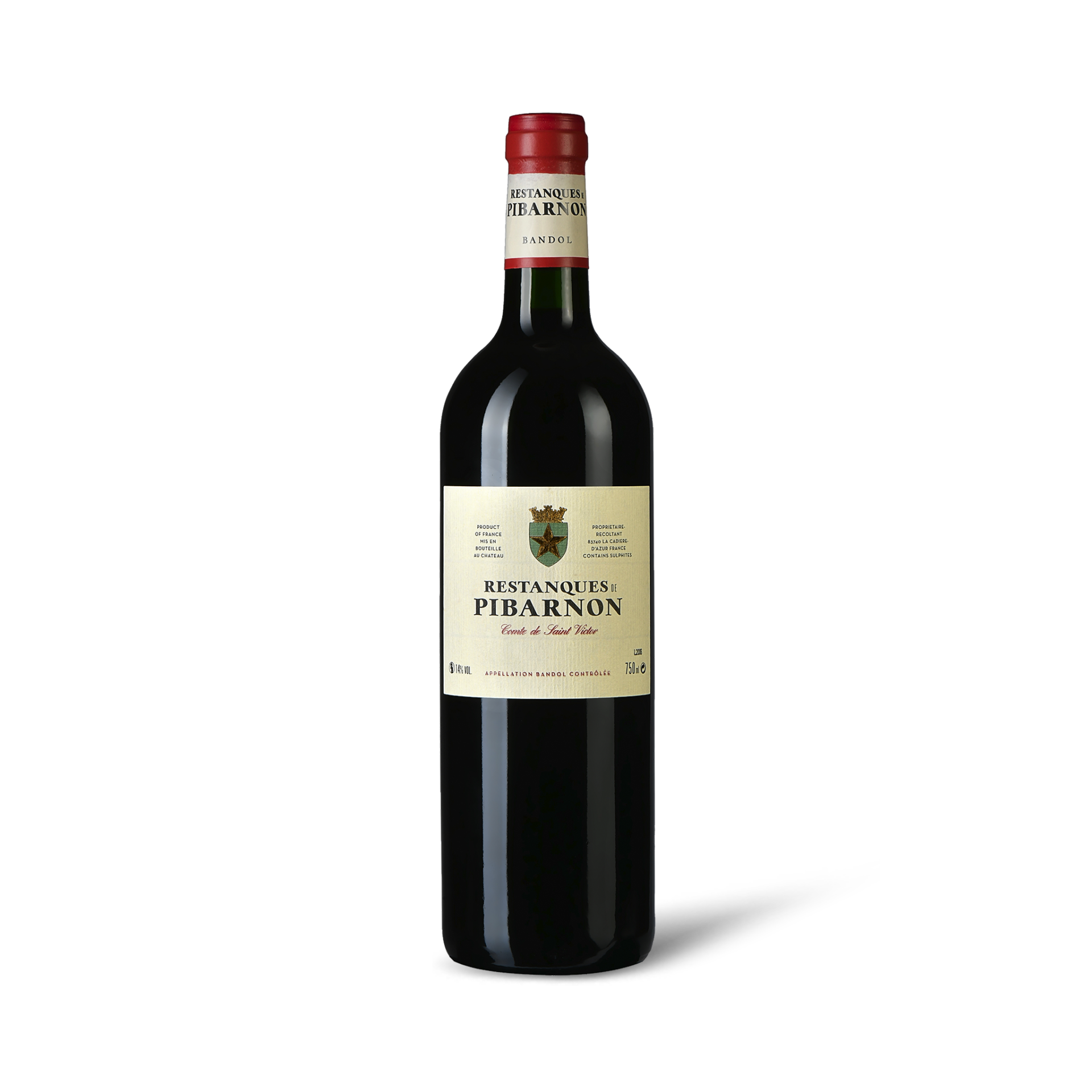 AOC BANDOL
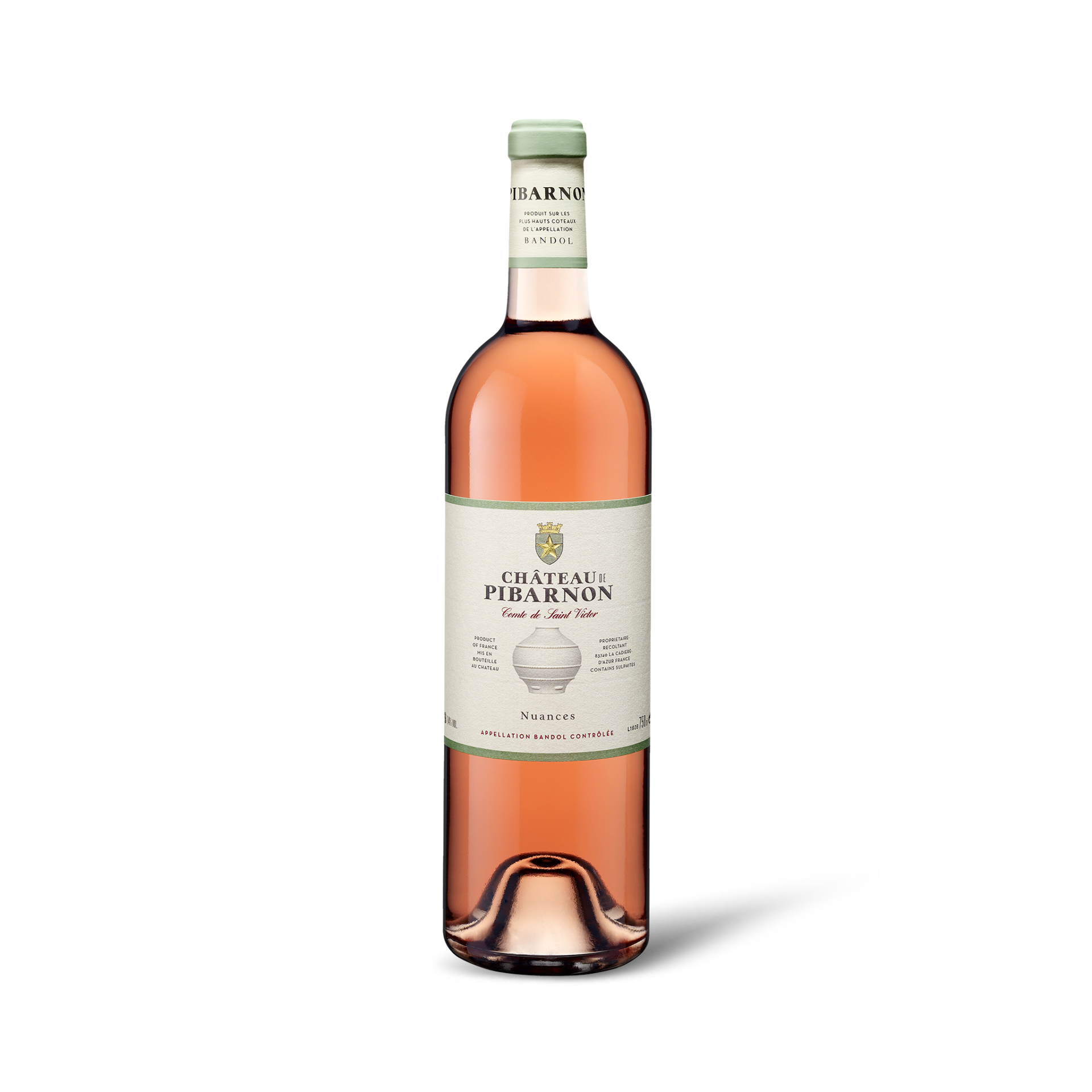 AOC BANDOL
 IGP Méditerranée
 AOC BANDOL
2021
Handsomely structured, Les Restanques de Pibarnon immediately shows which family it belongs to. Like most of the "Restanques" so far, it gives a delicate, airy, fine tactile sensation, very long on the palate. Its aromatics juggle sweet spices, black fruit and a complex, ripe vegetal character which, combined with that lovely texture, gives a wine that is anchored yet airy, finely woven, nobly Mediterranean.
Fine flights to be expected with colourful cooking, good meats and enticing pan juices.
COMING SOON
Hand-picked in slatted crates. The 2021 cuvée was picked between 1 September for the first Grenache and 20 September for the last Mourvèdre. Surface area of 8 ha of terraces on hillsides, up to 150 m above sea level. Yields in 2021: 25 hl/ha. Organic growing (certified in 2019) with some biodynamic principles (working the soil, infusions, 500 preparations, exploring essential oils).
70% mourvèdre - 30% grenache
Les Restanques embodies a different expression of Château de Pibarnon and our wish to offer a wine from a more classic terroir, between limestone and clay, from vines that are sometimes younger, with a blend more strongly marked by Grenache.
In vats, working by gravity. Partial destemming. Daily punching down for a slow, deep extraction of the fine tannins from the skins. Temperature control to preserve the aromas of fresh small berries. Aged for 18 months in large oak casks.
A year in line with those before it (except 2020). Rainfall was low but sufficient. As you know, relatively low rainfall means less vigorous growth, and therefore a more modest demand for water during the dry summer. Eric's management of the vineyard is bearing fruit in an increasingly visible way, and we finished the summer season with the prospect of harvesting nectar. The summer was not a scorching one. The thermometer did not exceed 31°C in the shade, and there was no sirocco or heat spike. Nothing stood in the way of a fine, relatively late-ripening harvest (the heart of the picking falls between 5 and 30 September), with competitive acidity levels, which bring low pH values (for the more discerning readers), a guarantee of tonus, longevity and energy.
2020
The approachable, unifying 2020 vintage gives these Restanques de Pibarnon an immediate sensation of deep, smooth, complex balance. The touch of insolence that always suits the Restanques thumbs its nose at consensus, bewitching the palate and steering it towards bistronomy. This wine needs pan juices, gravy, flesh.
With its fine balance, it will make friends at the best tables, from the simplest to the most refined, a companion to hearty dishes and to more classic fare. It is the sharing wine par excellence (fruit, liquorice, lovely freshness). It will accompany your finest meats, sweetbreads, braised pork, veal, racks of lamb, or any hearty dish.
Hand-picked in slatted crates. The 2020 harvest ran between 1 September for the first Grenache and 20 September for the last Mourvèdre. Surface area of 8 ha of terraces on hillsides, up to 150 m above sea level. Yields: 27 hl/ha. Organic growing (certified in 2019) with some biodynamic principles (working the soil, infusions, 500 preparations, exploring essential oils).
70% mourvèdre - 30% grenache
Les Restanques embodies a different expression of Château de Pibarnon and our wish to offer a wine from a more classic terroir, between limestone and clay, from vines that are sometimes younger, with a blend more strongly marked by Grenache.
In vats, working by gravity. Partial destemming. Daily punching down for a slow, deep extraction of the fine tannins from the skins. Temperature control to preserve the aromas of fresh small berries. Aged for 18 months in large oak casks.
The growing season, which can be taken to begin in October, at the end of the previous harvest, was perfect in every respect. A deluge of water spread through to Christmas already announced 500 mm of rain, which is considerable and very useful for the soils. By the end of June 2020, rainfall had reached a record figure of 1000 mm. A real new lease of life for these high-altitude terroirs, farmed biodynamically, and for all the microbial life of this soil horizon. Excellent growing conditions and fine balance in the plant, despite a little disease pressure (downy mildew then powdery mildew) quickly brought under control by light, targeted organic treatments, supplemented by herbal infusions and trials with essential oils. All that remained was to carry out a small green harvest in July, on certain plots, and to wait patiently for ripeness and the start of the picking.
2019
The great 2019 vintage has left its mark on this southern wine, which is luminous, precise and hedonistic all at once. Its juicy tannins are extremely fresh, as discreet as they are outgoing, with a broad, fruity stature. The taste buds are mesmerised by its allure and personality. There's no vulgarity in this direct, airy, slightly spicy approach. Les Restanques 2019, more immediate than its big brother from the Château, also harbours the beautiful complexity that is the hallmark of the Domaine's wines.
With its fine balance, it will be a friend of fine tables, from the simplest to the most refined, the companion of mischievous dishes and more classic fare. This is the wine for sharing par excellence (beautiful fruit and freshness). It is the perfect accompaniment to fine meats, sweetbreads, braised pork, veal knuckles, rack of lamb, or any dish of the canaille variety.
Hand-picked in openwork crates. Harvest in 2019 between 1 September for the first grenaches and 20 September for the last mourvèdres. Surface area: 8 ha of restanques on hillsides up to 150 m altitude. Yields: 27 hl/ha. Organic growing (certified in 2019) with some biodynamic principles (working the soil, infusions, 500 preparations, exploring essential oils).
70% MOURVEDRE / 30% GRENACHE.
Les Restanques is a vineyard planted on the hills. Wines from this vineyard represent the youth of CHATEAU de PIBARNON and the desire to produce wines from vines that come from the same terroir but that are 10 to 20 years younger, with much more pronounced Grenache flavours.
Gravity-fed vats. Partial destemming. Daily punching of the cap to extract the fine skin tannins slowly and thoroughly. Temperature control to preserve the aromas of fresh berries. Aged for 18 months in oak tuns.
2019 was a vintage to match your memories: the rain fell in abundance... but only from October to January! The health of the vineyards was exemplary, with very few treatments, very little action and little ploughing to prevent water evaporation. Little green growth, i.e. production adapted to the plant's capacity. Low yields.
It's true that 550mm of rain fell on the soil.
2018
This structurally refined vintage immediately takes you to a hedonistic universe, with its velvety texture but also sweet spices, crunchy fruit and energy. A fine first taste on the palate - accompanying, enveloping and precise. Your taste buds will be hypnotised thanks to the ripe, juicy and deep Mourvèdre which it partly comprises. A real tactile joy in the mouth.
With its fine balance, it will be a friend of fine tables, from the simplest to the most refined, the companion of both mischievous and more classic dishes. This is the wine for sharing par excellence (beautiful fruit and freshness). It will go well with fine meats, sweetbreads, braised pork, veal knuckles or rack of lamb.
Terraced hillsides surface area of 8 ha, up to 150m altitude. Yields of 30 hl / ha. Manual harvest, in 20 kg boxes.
70% MOURVEDRE / 30% GRENACHE.
Les Restanques is a vineyard planted on the hills. Wines from this vineyard represent the youth of CHATEAU de PIBARNON and the desire to produce wines from vines that come from the same terroir but that are 10 to 20 years younger, with much more pronounced Grenache flavours.
Gravity-fed vats. Partial destemming. Daily punching of the cap to extract the fine skin tannins slowly and thoroughly. Temperature control to preserve the aromas of fresh berries. Aged for 18 months in oak tuns.
2018 is an intuitive, elegant and balanced vintage. Marked by permanent humidity in the spring and beginning of summer, this vintage allowed the soil to flourish but also caused the development of mildew. We have almost never been under such pressure. We ultimately decided not to over-treat the vines and instead helped them to adapt and ripen their grapes. There was therefore very little copper this year and so the soils were preserved while the vineyard defended itself thanks to our cultivation methods and biodynamic production.
2017
The great 2017 vintage makes its mark on this southern, extroverted wine, with a broad and sensual stature. No vulgarity in this direct, hedonistic, and spicy approach. Its powdery tannins show its beautiful origin, and its distinguished side. The 2017 Restanques, more instantaneous and spherical than its big brother at the Château, also possesses this beautiful complexity, which is symbolic of the Domaine's wines. It exercises a fascination of the taste buds linked to the Mourvèdre: ripe, juicy and deep. A real tactile joy in the mouth.
With its fine balance, it will be a friend of fine tables, from the simplest to the most refined, the companion of both mischievous and more classic dishes. This is the wine for sharing par excellence (beautiful fruit and freshness). It will go well with fine meats, sweetbreads, braised pork, veal knuckles or rack of lamb.
35 hectoliters per hectare (about 1700 t/acre) Surface: 8 hectares on hill-side, at an altitude of 200m above sea level. Harvest from September 5th for the first Grenache to September 20th for the latest mourvèdre.
70 % MOURVEDRE - 30 % GRENACHE
Les Restanques is a vineyard planted on the hills. Wines from this vineyard represent the youth of CHATEAU de PIBARNON and the desire to produce wines from vines that come from the same terroir but that are 10 to 20 years younger, with much more pronounced Grenache flavours.
The grapes are completely destemmed and placed in vats without the aid of pumps. Grapes are treaded daily in order to extract the delicate tannins from the skin. Temperature is controlled in order to retain the wine's fresh berry aromas. It is aged for 18 months, some of it in Burgundian-style barrels and the rest in oak barrels.
2017 is far from being the archetypal 'hot' vintage! The magic of the land, of course, but also the beautiful water reserves, thanks to a very wet winter. The 500mm of rain that fell until the end of April generated good reserves that cancelled out the drought of 2016. Very moderate grape production, with a low natural yield (around 30hl per hectare, which is really not much), and the few bunches per stem have reached a really lovely maturity. The 2017 Restanques is a direct follow-up to the 2015 Restanques, as there wasn't one in 2016 (the Grenache fell through in this vintage and so the Mourvèdres joined the 2016 rosé).
2015
Wisdom shines from within this Restanques 2015 and complex plant overtones are shown on the nose, such as sandalwood, garrigue, wild herbs and pepper, supported by fruity wild berries. The palate shows good density mixed with delicate tannins, producing a pure tasting experience. The wine's elegance gives it depth and freshness. In a few months this classic wine will bear the qualities of a sensual wine from the south.
With its fine balance, it will be a friend of fine tables, from the simplest to the most refined, the companion of both mischievous and more classic dishes. This is the wine for sharing par excellence (beautiful fruit and freshness). It will go well with fine meats, sweetbreads, braised pork, veal knuckles or rack of lamb.
35 hectoliters per hectare (about 1700 t/acre) Surface: 8 hectares on hill-side, at an altitude of 200m above sea level. Harvest from September 5th for the first Grenache to September 20th for the latest mourvèdre.
70% MOURVÈDRE + 30% GRENACHE
Les Restanques is a vineyard planted on the hills. Wines from this vineyard represent the youth of CHATEAU de PIBARNON and the desire to produce wines from vines that come from the same terroir but that are 10 to 20 years younger, with much more pronounced Grenache flavours.
The grapes are completely destemmed and placed in vats without the aid of pumps. Grapes are treaded daily in order to extract the delicate tannins from the skin. Temperature is controlled in order to retain the wine's fresh berry aromas. It is aged for 18 months, some of it in Burgundian-style barrels and the rest in oak barrels.
It's a year of equilibrium, finesse and beautiful maturity. Little excess, despite rainfall stopping prematurely (late April). Was it a hot year? Yes, certainly, on average, but evened out by cool nights. Here, we benefit from the sea air and night time mist that evaporates very quickly in the early morning. Was it a dry year? No, our terroir at high altitude has poor yet deep soils that gradually create winter reserves for the vines. The limestone provides a silky texture, and has a decent acid and mineral support
2014
The wine produces elegant overtones of fresh plum, spices including cardamom, slight floral hints and defined wood aromas. At first sip, it is precise, dense, energetic and spicy on the palate, developing attractive volume and length and concluding with a sapid and crispy finish. Dense yet elegant tannins and a silky texture make this a memorable vintage. This well-balanced wine is a perfect addition to both humble and sophisticated dinners and a perfect accompaniment to both simple and refined dishes. This wine should be drunk by all to celebrate its beautifully fruity and refreshing aromas. It goes perfectly with meat such as sweetbread, braised pork, veal or lamb chops.
With its fine balance, it will be a friend of fine tables, from the simplest to the most refined, the companion of both mischievous and more classic dishes. This is the wine for sharing par excellence (beautiful fruit and freshness). It will go well with fine meats, sweetbreads, braised pork, veal knuckles or rack of lamb.
Handpicked grapes with a small team of pickers. Grapes harvested in small boxes in order to prevent from oxidation. 35 hectoliters per hectare (about 1700 t/acre) Surface: 8 hectares on hill-side, at an altitude of 200m above sea level.
70% Mourvèdre and 30% Grenache
Les Restanques is a vineyard planted on the hills. Wines from this vineyard represent the youth of CHATEAU de PIBARNON and the desire to produce wines from vines that come from the same terroir but that are 10 to 20 years younger, with much more pronounced Grenache flavours.
The grapes are completely destemmed and placed in vats without the aid of pumps. Grapes are treaded daily in order to extract the delicate tannins from the skin. Temperature is controlled in order to retain the wine's fresh berry aromas. It is aged for 18 months, some of it in Burgundian-style barrels and the rest in oak barrels.
After more than 35 years of winemaking at the Domaine, it's still surprising to experience an unprecedented situation at each harvest. In appearance, it is a rather mild year, not very hot, and perfectly regulated from a hydration point of view. Beautiful, but not excessive, rains in winter and spring pave the way to a mild and dry summer. There is even a thunderstorm on 15th August, which revives the foliar activity and the cold hardening process. We are therefore calmly expecting rather late maturities. In fact, the vintage is earlier than we imagined: El Nino woke up: very good. Beautiful maturity and tannins, the first vats are harvested at perfect maturity. An unprecedented hail storm just before the harvest scares us out of our minds. But fortunately, the leaves of Mourvèdre are like helmets and there is no harm done.
2012
The tannins in the 2012 vintage are much less pronounced than those in 2011. Its velvety texture and elegance is a pleasure on the palate. From the very first sip we can taste the fruitiness, softness and roundness of this blend. The wine's subtly spicy tones are representative of the Bandol character and its grape variety. This well-balanced wine is a perfect addition to both humble and sophisticated dinners and a perfect accompaniment to both simple and refined dishes. This wine should be drunk by all to celebrate its beautifully fruity and refreshing aromas. It goes perfectly with meat such as sweetbread, braised pork, veal or lamb chops.
With its fine balance, it will be a friend of fine tables, from the simplest to the most refined, the companion of both mischievous and more classic dishes. This is the wine for sharing par excellence (beautiful fruit and freshness). It will go well with fine meats, sweetbreads, braised pork, veal knuckles or rack of lamb.
Handpicked grapes with a small team of pickers. Grapes harvested in small boxes in order to prevent from oxidation. 35 hectoliters per hectare (about 1700 t/acre) Surface: 8 hectares on hill-side, at an altitude of 200m above sea level. Harvest from September 5th for the first Grenache to September 20th for the latest mourvèdre.
70% Mourvèdre and 30% Grenache
A restanque is a hill-side terrace, where vineyards are planted. The wine of "Les Restanques" represents the second label of CHATEAU DE PIBARNON. Slightly younger vines are planted in the same soil of clay and limestone. This new wine compliments Mourvèdre with Grenache and excels in mineral qualities, deepness and finesse. It offers a wonderful Bandol, suave with a generous bouquet.
The grapes are put into tanks by gravity, without using any pumps, in order to keep the grapes intact. Traditional vinification in stainless steel tanks, with total de-stemming. Daily punching over of the cap for better extraction of aroma and fine tannins from the grape skins. Long fermentation (during 25 days). AGEING during 18 months, one part in large new oak casks from the "massif central" in France, and Austria (Stockinger), and another part in small oak barrels. Bottled in July 2013.
Surprisingly, the icy period had little effect on the vines. What we positively recall instead is the mild winter that concluded with a dry and fine March. April and May were more capricious and brought with them much needed rainfall. The vineyards got more than enough water to last them through the summer. In July and August, nights were rather cool (15°C at dawn at times), ensuring an ideal temperature range. Perfect for tannin ripening without excess sugar. Heavy rainfall (40mm) ends this successful ripening period.
2011
Les Restanques 2011 is a beautiful vintage. This wine faithfully imposes the authenticity of Pibarnon's terroir bringing, as well, a wind of innocence and exuberance. The nose is intense and generous. It combines red and black fruits, with some subtle notes of tobacco, spice, pepper and aromatic herbs. In mouth, the Mourvèdre develops beautiful power, admirably controlled, that preserves a fresh and aromatic finish. It is ready to drink, with its youthful charm, or can age a few years more and reveal the Mourvèdre's full potential.
Because of its generosity, it will make a friend of the simplest to the most refined tables. It's the perfect wine for sharing, with its lovely fruit, freshness and roundness. It will accompany your finest meats, sweetbreads, braised pork, veal knuckles or rack of lamb. A few spring vegetables will add a touch of sweetness and freshness.
35 hectoliters per hectare (about 1700 t/acre) Surface: 8 hectares on hill-side, at an altitude of 200 m above sea level.
70% Mourvèdre and 30% Grenache
A restanque is a hill-side terrace, where vineyards are planted. The wine of "Les Restanques" represents the second label of CHATEAU DE PIBARNON. Slightly younger vines are planted in the same soil of clay and limestone. This new wine compliments Mourvèdre with Grenache and excels in mineral qualities, deepness and finesse. It offers a wonderful Bandol, suave with a generous bouquet.
VINIFICATION/AGEING: The grapes are put into tanks by gravity, without using any pumps, in order to keep the grapes intact. Traditional vinification in stainless steel tanks, with total de-stemming. Daily punching over of the cap for better extraction of aroma and fine tannins from the grape skins. Long fermentation (during 25 days). AGEING during 18 months, one part in large new oak casks from the "massif central" in France, and Austria (Stockinger), and another part in small oak barrels. Bottled in July 2012.
Precipitation in 2011 exceeded 650 mm of water with such a very rainy winter. It is therefore with significant reserves that the 2011 was able to flourish and grow. The latest rains fell late April - early May, on a little requesting vegetation water subsequently. The summer was dry and windy, but cold enough: water température in July :15° C, a record! The Mediterranean has really played his role as air conditioner. Then came September, softer, warmer, allowing us to healthy harvest, the grapes mature, harvested earlier than
usual
2010
Les Restanques 2010 is a remarkable vintage. This wine faithfully imposes the authenticity of Pibarnon's terroir bringing, as well, a wind of innocence and exuberance. The nose is intense and generous. It combines red and black fruits, with some subtle notes of tobacco, spice, pepper and aromatic herbs. In mouth, the Mourvèdre develops beautiful power, admirably controlled, that preserves a fresh and aromatic finish. It is ready to drink, with its youthful charm, or can age a few years more and reveal the Mourvèdre's full potential.
Because of its generosity, it will make a friend of the simplest to the most refined tables. It's the perfect wine for sharing, with its lovely fruit, freshness and roundness. It will accompany your finest meats, sweetbreads, braised pork, veal knuckles or rack of lamb. A few spring vegetables will add a touch of sweetness and freshness.
35 hectoliters per hectare (about 1700 t/acre) Surface: 8 hectares on hill-side, at an altitude of 200 m above sea level.
70 % MOURVEDRE - 30 % GRENACHE
A restanque is a hill-side terrace, where vineyards are planted. The wine of "Les Restanques" represents the second label of CHATEAU DE PIBARNON. Slightly younger vines are planted in the same soil of clay and limestone. This new wine compliments Mourvèdre with Grenache and excels in mineral taste, deepness and finesse. It offers a wonderful Bandol, suave with a generous bouquet.
The grapes are put into tanks by gravity, without using any pumps, in order to respect good grape integrity. Traditional vinification in stainless steel tanks, with total de-stemming. Daily punching over of the cap for better extraction of aroma and fine tannins from the grape skins. Long fermentation (during 25 days). AGEING during 18 months, one part in large new oak casks from the "massif central" in France, and another part in small oak barrels. Bottled in July 2011.
Maybe the most accomplished vintage we have had in the last ten years. The rainfall during the winter and spring were high, providing large water reserves in the soil. A mild spring preceded a beautiful dry but cool summer. Consequently, we had a slower ripening and we kept an impressive freshness unseen for a long time.
2009
Les Restanques 2009 faithfully imposes the authenticity of Pibarnon's terroir bringing as well a wind of innocence and exuberance. The nose is intense and generous. It combines red and black fruits, with some subtle notes of tobacco, spice and aromatic herbs. In mouth, the Mourvèdre develops a beautiful power admirably controlled, which preserves a fresh and aromatic finish. It is ready to drink, with its youthful charm, or can few years more in order to reveal the Mourvèdre's potential.
Because of its generosity, it will make a friend of the simplest to the most refined tables. It's the perfect wine for sharing, with its lovely fruit, freshness and roundness. It will accompany your finest meats, sweetbreads, braised pork, veal knuckles or rack of lamb. A few spring vegetables will add a touch of sweetness and freshness.
35 hectoliters per hectare (about 1700 t/acre) Surface: 4 hectares on hill-side, at an altitude of 200 m above sea level.
70 % MOURVEDRE - 30 % GRENACHE
A restanque is a hill-side terrace, where vineyards are planted. The wine of Les Restanques represents the second label of CHATEAU DE PIBARNON. From the same soil, between clay and limestone, with a bit younger vines, it is also marked out by the Grenache. This new wine excels in mineral taste, deepness and finesse. It offers as well, a wonderful Bandol, suave with a "greedy" bouquet.
The grapes are completely destemmed and placed in vats without the aid of pumps. Grapes are treaded daily in order to extract the delicate tannins from the skin. Temperature is controlled in order to retain the wine's fresh berry aromas. It is aged for 18 months, some of it in Burgundian-style barrels and the rest in oak barrels.
Still a fantastic vintage in Provence. We had some heavy rainfall during the winter and spring which has been really interesting to restore the reserves of water in the soils and for the plant. It was a dry and hot summer, without excess. The mistral wind blew in its regular rhythm encouraging an optimal sanitary state of the crop. Beginning of the harvest 1st of September with a good balance between power and freshness.
2006
Les Restanques 2006 faithfully imposes the authenticity of Pibarnon's terroir. The nose is intense and generous. It combines red and black fruits, with some subtle notes of tobacco, spice and aromatic herbs. In mouth, the Mourvèdre develops a beautiful power admirably controlled, which preserves a fresh and aromatic finish. It is ready to drink, with its youthful charm, or can age 2 or 3 years in order to reveal the Mourvèdre's potential.
It's the perfect accompaniment to veal sweetbreads, braised pork, veal knuckles or rack of lamb. All served with spring vegetables, which add a pleasant sweet note.
35 hectoliters per hectare (about 1700 t/acre) Surface: 4 hectares on hill-side, at an altitude of 200 m above sea level.
70 % MOURVEDRE - 30 % GRENACHE
A restanque is a hill-side terrace, where vineyards are planted. The wine of Les Restanques represents the second label of CHATEAU DE PIBARNON. From the same soil, between clay and limestone, with a bit younger vines, it is also marked out by the Grenache. This new wine excels in mineral taste, deepness and finesse. It offers as well, a wonderful Bandol, suave with a "greedy" bouquet.
The grapes are put into tanks by gravity, without using any pumps, in order to respect good grape integrity. Traditional vinification in stainless steel tanks, with total de-stemming. Daily punching over of the cap for better extraction of aroma and fine tannins from the grape skins. Long fermentation (during 25 days). AGEING during 18 months, one part in large new oak casks from the "massif central" in France, and another part in small oak barrels. Bottled in July 2008.
In our calcareous Provence, the month of august 2006 contributed once again to it becoming one of the greatest vintages of the last ten years. It was a dry and hot summer, without excess. The mistral wind blew in its regular rhythm of about 3 to 9 days, encouraging an optimal sanitary state of the crop.
2005
The Red 2005 Restanques de Pibarnon reveals with fidelity the quality of its origins. The nose, intense and aromatic reveals fresh notes which evoke little black fruits and subtle blond tobacco scents. On tasting, roundness, delicacy, thanks to a silky texture (characteristic of the vintage) which announces a really fresh and aromatic final. A very pleasant, suave and racy wine, to drink now or next years.
It's the perfect accompaniment to veal sweetbreads, braised pork, veal knuckles or rack of lamb. All served with spring vegetables, which add a pleasant sweet note.
35 hectoliters per hectare (about 1700 t/acre) Surface: 4 hectares on hill-side, at an altitude of 200 m above sea level.
70 % MOURVEDRE - 30 % GRENACHE
A restanque is an hill-side terrace, where vineyards are planted. The wine of Les Restanques is the second label of CHATEAU DE PIBARNON. From the same soil, but with a bit younger vines, it is still characterized by the Grenache. This new wine makes the "Grand vin" stronger in its minerality, deepness and finesse, but offers in the same time a wonderful Bandol, suave, and having a nice bouquet.
Grapes receipted and put into tanks by gravity, without using any must pump, in order to respect a good grape integrity. Traditional vinification in stainless steel tanks, with total de-stemming. Punching of the cap everyday for a better extraction of aroma and fine tannins from the grape skin. Long fermentation (during 25 days). MATURING during 18 months, a part in new oak barrels from the centre of France (big barrels), and another part in oak casks. The whole is bottled in July 2007.
Great vintage in the south of France. Few rains during the winter, and a nice spring which precedes an optimal summer with cool night and warm days. A lot of Mistral (the local dry wind), especially in july and august, which offers a perfect sanitary state of the crop. The terroir of Chateau de Pibarnon is able to keep the winter water and gives it back slowly to the vines during very hot summers. As in 2004, two rains in the beginning of september, gives vigour and strength to the plant, allowing in the same time a complete tannin's maturity.
2004
The Red 2004 Restanques de Pibarnon immediately reveals the quality of its origins. It offers a great aroma intensity, thanks to its soil: little red and raspberry, floral marks of lilies, a few delicate spices and a hint mint and pepper. The mouth is worthy of great wines: full, supple, well-balanced, with elegant and silky tannins. A very pleasant, suave and racy wine, to drink now or next years.
It's the perfect accompaniment to veal sweetbreads, braised pork, veal knuckles or rack of lamb. All served with spring vegetables, which add a pleasant sweet note.
35 hectoliters per hectare (about 1700 t/acre) Surface: 4 hectares on hill-side, at an altitude of 200 m above sea level.
70 % MOURVEDRE - 30 % GRENACHE
A restanque is a hill-side terrace, where vineyards are planted. The wine of "Les Restanques" represents the second label of CHATEAU DE PIBARNON. Slightly younger vines are planted in the same soil of clay and limestone. This new wine compliments Mourvèdre with Grenache and excels in mineral taste, deepness and finesse. It offers a wonderful Bandol, suave with a generous bouquet.
Grapes receipted and put into tanks by gravity, without using any must pump, in order to respect a good grape integrity. Traditionnal vinification in stainless steel tanks, with total de-stemming. Punching of the cap everyday for a better extraction of aroma and fine tannins from the grape skin. Long fermentation (during 25 days). MATURING during 18 months, a part in new oak barrels from the center of France (big barrels), and another part in oak casks. The whole is bottled in July 2006.
Great vintage in the south of France. Lots of rain during a cold winter, and a warm spring. The summer was particularly hot and dry, and perfect to ripen the grapes properly. The terroir of Chateau de Pibarnon is good enough to keep the winter water and give it back slowly to the vines during such a very hot summer. According to the average altitude of the terraces (900 ft), the nights were cold. Everything was perfect to get a wonderful vintage.
2003
The Red 2003 Restanques de Pibarnon immediately reveals the quality of its origins. It offers a great aroma intensity, thanks to its soil: little red and black berries, floral marks, a few delicate spices and a hint of pepper. The mouth is worthy of great wines: full, well-balanced, with elegant and silky tannins. A very pleasant, suave and racy wine, to drink now or next years.
It's the perfect accompaniment to veal sweetbreads, braised pork, veal knuckles or rack of lamb. All served with spring vegetables, which add a pleasant sweet note.
35 hectoliters per hectare (about 1700 t/acre) Surface: 5 hectares on hill-side, at an altitude of 200 m above sea level.
70% MOURVEDRE / 30% GRENACHE.
A restanque is an hill-side terrace, where vineyards are planted. The wine of Les Restanques is the second label of CHATEAU DE PIBARNON. From the same soil, but with a bit younger vines, it is still characterized by the Grenache. This new wine makes the "Grand vin" stronger in its minerality, deepness and finesse, but offers in the same time a wonderful Bandol, suave, and having a nice bouquet
Grapes receipted and put into tanks by gravity, without using any must pump, in order to respect a good grape integrity. Traditionnal vinification in stainless steel tanks, with total de-stemming. Punching of the cap everyday for a better extraction of aroma and fine tannins from the grape skin. Long fermentation (during 25 days). MATURING during 20 months, a part in new oak barrels from the center of France (big barrels), and another part in oak casks. The whole is bottled in June 2005.
Great vintage. Cold and rainy winter, and a nice spring, before the well known heatwave. Fortunately, ground floors of this great soil has kept enough moisture thanks to good winter rains. Furthermore, with the altitude, the nights are quite fresh. Consequently, harvesting was quite late for this vintage (from 5 to 25 of September), offering a beautiful ripeness, and a good freshness.

The Rosé Nuances was born out of our successive tastings of young and older vintages of rosé at Pibarnon. In the past, we often used to launch a new vintage in mid-August, on notes that were already more complex, with a broad, fully open structure, knowing that a classic Pibarnon rosé drinks easily the following year and for more than five years after that.
That is how the idea of a Great Rosé took shape: a rosé deliberately kept in the cellar, and only truly released after 2 years, in its second spring, to be served with spring, autumn and winter dishes.
Our choice therefore naturally fell on a very high proportion of Mourvèdre (95%), which has the immense quality of taking longer to open up, and of lasting a very long time. A dedicated, late-ripening plot at altitude, picked in the early morning so the grapes are perfectly cool. It is "Le Col de Bel Air". Of course, conceiving a Great Rosé also means thinking about vinification and ageing, here in the same vessel. Since the 2021 vintage, stoneware jars have taken over, replacing 100% of the original large cask that held part of the musts. 100% stoneware! A noble, barely porous earth that gives brilliance, tension and purity, while remaining perfectly neutral. What is more, stoneware is, to my knowledge, the only material that is both naturally geological and shaped by human hands. A double nobility…
Production is small; this is an exceptional rosé. We have chosen our finest terroirs, with Bandol yields (for the record, less than 32 hl/ha in normal times, currently 27 hl/ha). Indigenous yeasts, a sensible fermentation temperature (20/21°C), to extract varietal rather than fermentation aromas. Late bottling, in mid-June 2023.
Its lovely colour, deep yet delicate, announces a complex, airy and ample wine. The aromatic range of Nuances is reinforced by the pre-fermentation infusion, and offers red berries, some citrus (the pulp), and a vegetal freshness of garrigue, sage and fresh herbs. On the palate it is pulpy, ample and elegant, with that endless, fresh length. While full of energy, it knows how to fade away gradually, after a long persistence, like an evanescence. This wine calls out for white meats (poultry, veal, pork), for autumn thrush, for duckling, for red and white offal, and even for foie gras. It is also a hymn to the Mediterranean: it is made for red mullet, saffron, spiny lobster, anchovies… A great rosé for the table, conceived for laying down.
The Rosé Nuances was born out of our successive tastings of young and older vintages of rosé at Pibarnon. In the past, we often used to launch a new vintage in mid-August, on notes that were already more complex, with a broad, fully open structure, knowing that a classic Pibarnon rosé drinks easily the following year and for more than five years after that.
That is how the idea of a Great Rosé took shape: a rosé deliberately kept in the cellar, and only truly released after 2 years, in its second spring, to be served with spring, autumn and winter dishes.
Our choice therefore naturally fell on a very high proportion of Mourvèdre (95%), which has the immense quality of taking longer to open up, and of lasting a very long time. A dedicated, late-ripening plot at altitude, picked in the early morning so the grapes are perfectly cool. It is "Le Col de Bel Air". Of course, conceiving a Great Rosé also means thinking about vinification and ageing, here in the same vessel. What is more, stoneware is, to my knowledge, the only material that is both naturally geological and shaped by human hands. A double nobility…
Since this 2021 vintage, stoneware jars have taken over, replacing 100% of the original large cask that held part of the musts.
100% stoneware! A noble, barely porous earth that gives brilliance, tension and purity, while remaining perfectly neutral.
Production is small; this is an exceptional rosé. We have chosen our finest terroirs, with Bandol yields (for the record, less than 32 hl/ha in normal times, currently 27 hl/ha).
Indigenous yeasts, a sensible fermentation temperature (20/21°C), to extract varietal rather than fermentation aromas.
Late bottling, in mid-June 2022.
Its fairly deep colour, delicately shot through with shades close to saffron pistil, announces a certain complexity. On the nose, it is a discreet, complex explosion of small red berries and bilberries, joined by a vegetal dimension of black tea, sage and garrigue, all of it refreshed by notes of fresh herbs and mint. Even today (early December 2024), it needs a light decanting (the carafe nicely set on a bed of ice cubes), and above all a serving temperature of 15 or even 16°C. This wine calls out for white meats (poultry, veal, pork), for autumn thrush, for duckling, for red and white offal, and even for foie gras. It is also a hymn to the Mediterranean: it is made for red mullet, saffron, spiny lobster, anchovies… A great rosé for the table, conceived for laying down.
This full, wholehearted opening reveals on the palate a world that is finely edged, ample and particularly flavoursome.
A multidimensional brilliance opens up on the palate, with all the aromas lingering, as much in persistence as in texture.
Its finish is already drawn out and reveals the sapid sensation that traditionally signs this wine.
NUANCES Rosé was born out of our continuous tastings of Pibarnon's young and older vintage Rosés. In the past, we often had to launch a new vintage in mid-August with already more complex notes and a broad and fulfilling structure, knowing that a Classic Pibarnon Rosé can easily be drunk the following year and for years to come.
So, this is how the idea for a Grand Rosé sprung up: a rosé that would be deliberately kept in the cellar during the first spring and the first summer and would then be launched in the autumn, to be served with white meats, autumn and winter dishes, whilst maintaining hints of the Mediterranean.
We therefore naturally chose to focus on a very high percentage of Mourvèdre (95%), which has the amazing quality of taking longer to open up and therefore lasting longer. A dedicated plot at an altitude, harvested late in the year on a Mistral day, but early in the morning for perfect grapes. Of course, a Grand Rosé also depends on the vinification and ageing process.
Production remains quite small: it is an exceptional rosé. We chose our best soils, with Bandol's yields (for the record, less than 35 hl / ha). Natural yeasts, good quality wine-making temperature of (21/23°C), to extract aromas of the grape variety, not fermentative. Late bottling: mid-June 2020. Available in 2022.
Its delicately iridescent, rather deep colour keeps its promise: on the nose, it's an elegant explosion of red fruit, Morello cherry, redcurrant, refreshed by notes of citrus, grass and mint. On the palate, this fine, delicate, full-bodied wine reveals a fine, full-bodied and particularly delicious world. The young finish needs just a few months to lengthen and leave the sapid sensation that traditionally characterises this wine. Today, in January 2022, it needs a light carafage (decanter nicely placed on a bed of ice cubes), and a drinking temperature of 14/15°C. This Rosé Nuances 2020 will have to wait a little longer, and it will be a call for white meats A great mealtime rosé, designed to keep well.
white meat, autumn thrush and partridge. It's also a hymn to the Mediterranean: it's made for red mullet, saffron, lobster...
NUANCES Rosé was born out of our continuous tastings of Pibarnon's young and older vintage Rosés. In the past, we often had to launch a new vintage in mid-August with already more complex notes and a broad and fulfilling structure, knowing that a Classic Pibarnon Rosé can easily be drunk the following year and for years to come.
So, this is how the idea for a Grand Rosé sprung up: a rosé that would be deliberately kept in the cellar during the first spring and the first summer and would then be launched in the autumn, to be served with white meats, autumn and winter dishes, whilst maintaining hints of the Mediterranean.
We therefore naturally chose to focus on a very high percentage of Mourvèdre (95%), which has the amazing quality of taking longer to open up and therefore lasting longer. A dedicated plot at an altitude, harvested late in the year on a Mistral day, but early in the morning for perfect grapes. Of course, a Grand Rosé also depends on the vinification and ageing process.
Production remains quite small: it is an exceptional rosé. We chose our best soils, with Bandol's yields (for the record, less than 35 hl / ha). Natural yeasts, good quality wine-making temperature of (21/23°C), to extract aromas of the grape variety, not fermentative. Late bottling: mid-June 2020. Available in 2022.
A gently iridescent and sustained colour with an elegant and refreshing aroma. Nothing but elegance. On the nose, a little noble vegetal touch and a murmur of red berries that intensify and then welcome liquorice and spicy aromas, such as saffron. A large, full-bodied and crunchy yet powerful structure on the palate, sapid with phenomenal length. A rosé for decanting, to be placed on a bed of ice. This Rosé Nuances 2019 should wait a little longer and will go perfectly with white meat, autumnal thrush and partridges. It's also an ode to the Mediterranean; it is the
ideal partner for red mullet, saffron, lobsters... A great mealtime rosé, can be stored.
NUANCES Rosé was born out of our continuous tastings of Pibarnon's young and older vintage Rosés. In the past, we often had to launch a new vintage in mid-August with already more complex notes and a broad and fulfilling structure, knowing that a Classic Pibarnon Rosé can easily be drunk the following year and for years to come.
So, this is how the idea for a Grand Rosé sprung up: a rosé that would be deliberately kept in the cellar during the first spring and the first summer and would then be launched in the autumn, to be served with white meats, autumn and winter dishes, whilst maintaining hints of the Mediterranean.
We naturally focused our choice on a 95% Mourvèdre, which has the immense quality of taking longer to open up, then lasting for a very long time. Of course, a Grand Rosé is also a matter of wine-making and a choice of aging. A combined option was choosen: partly in Franz Stockinger 30hl large oak cask, which is very neutral in terms of toasting, but do bring the necessary oxygen; and partly in stoneware, a noble and porous earth that gives tension and purity.
Production remains quite small: it is an exceptional rosé. We chose our best soils, with Bandol's yields (for the record, less than 35 hl / ha). Natural yeasts, good quality wine-making temperature of (21/23°C), to extract aromas of the grape variety, not fermentative. Wine bottled late, mid-June 2019. Available beginning October 2021.
A delicately iridescent and subtle colour, elegant and refreshingly aromatic. Nothing extravagant, just finesse. It reveals a faint hint of greenery and an undertone of red fruits that will intensify, then allow the liquorice and spices to make an appearance. On the palate, it is broad, ample, simultaneously both crisp and powerful, blessed with a phenomenal and palatable length. A rosé to be decanted into a carafe lying on ice. This rosé Nuances 2018 draws us to white meats, autumnal thrushes, partridges. It's also a tribute to the Mediterranean: it is made for red mullet, saffron, crayfish... A great mealtime rosé, can be stored.
NUANCES Rosé was born out of our continuous tastings of Pibarnon's young and older vintage Rosés. In the past, we often had to launch a new vintage in mid-August with already more complex notes and a broad and fulfilling structure, knowing that a Classic Pibarnon Rosé can easily be drunk the following year and for years to come.
So, this is how the idea for a Grand Rosé sprung up: a rosé that would be deliberately kept in the cellar during the first spring and the first summer and would then be launched in the autumn, to be served with white meats, autumn and winter dishes, whilst maintaining hints of the Mediterranean.
We naturally focused our choice on a 95% Mourvèdre, which has the immense quality of taking longer to open up, then lasting for a very long time. Of course, a Grand Rosé is also a matter of wine-making and a choice of aging. A combined option was choosen: partly in Franz Stockinger 30hl large oak cask, which is very neutral in terms of toasting, but do bring the necessary oxygen; and partly in stoneware, a noble and porous earth that gives tension and purity.
Production remains quite small: it is an exceptional rosé. We chose our best soils, with Bandol's yields (for the record, less than 35 hl / ha). Natural yeasts, good quality wine-making temperature of (21/23°C), to extract aromas of the grape variety, not fermentative. Wine bottled late, mid-June 2018. Available in spring 2019.
A delicately iridescent and subtle colour, elegant and refreshingly aromatic. Nothing extravagant, just finesse. It reveals a faint hint of greenery and an undertone of red fruits that will intensify, then allow the liquorice and spices to make an appearance. On the palate, it is broad, ample, simultaneously both crisp and powerful, blessed with a phenomenal and palatable length. This rosé Nuances 2017 draws us to white meats, autumnal thrushes, partridges. It's
also a tribute to the Mediterranean: it is made for red mullet, saffron, crayfish... A great mealtime rosé, can be stored.
NUANCES Rosé was born out of our continuous tastings of Pibarnon's young and older vintage Rosés. In the past, we often had to launch a new vintage in mid-August with already more complex notes and a broad and fulfilling structure, knowing that a Classic Pibarnon Rosé can easily be drunk the following year and for years to come.
So, this is how the idea for a Grand Rosé sprung up: a rosé that would be deliberately kept in the cellar during the first spring and the first summer and would then be launched in the autumn, to be served with white meats, autumn and winter dishes, whilst maintaining hints of the Mediterranean.
We naturally focused our choice on a 100% Mourvèdre, which has the immense quality of taking longer to open up, then lasting for a very long time. Of course, a Grand Rosé is also a matter of wine-making and a choice of aging. A combined option was choosen: partly in Franz Stockinger 30hl large oak cask, which is very neutral in terms of toasting, but do bring the necessary oxygen; and partly in stoneware, a noble and porous earth that gives tension and purity.
Production remains quite small: it is an exceptional rosé. We chose our best soils, with Bandol's yields (for the record, less than 35 hl / ha). Natural yeasts, good quality wine-making temperature of (21/23°C), to extract aromas of the grape variety, not fermentative. Wine bottled late, mid-June 2017. Available beginning October 2017.
A delicately iridescent and subtle colour, elegant and refreshingly aromatic. Nothing extravagant, just finesse. It reveals a faint hint of greenery and an undertone of red fruits that will intensify, then allow the liquorice and spices to make an appearance. On the palate, it is broad, ample, simultaneously both crisp and powerful, blessed with a phenomenal and palatable length. This rosé Nuances 2016 draws us to white meats, autumnal thrushes, partridges. It's
also a tribute to the Mediterranean: it is made for red mullet, saffron, crayfish... A great mealtime rosé, can be stored.
NUANCES Rosé was born out of our continuous tastings of Pibarnon's young and older vintage Rosés. In the past, we often had to launch a new vintage in mid-August with already more complex notes and a broad and fulfilling structure, knowing that a Classic Pibarnon Rosé can easily be drunk the following year and for years to come.
So, this is how the idea for a Grand Rosé sprung up: a rosé that would be deliberately kept in the cellar during the first spring and the first summer and would then be launched in the autumn, to be served with white meats, autumn and winter dishes, whilst maintaining hints of the Mediterranean.
We naturally focused our choice on a 95% Mourvèdre, which has the immense quality of taking longer to open up, then lasting for a very long time. Of course, a Grand Rosé is also a matter of wine-making and a choice of aging. A combined option was choosen: partly in Franz Stockinger 30hl large oak cask, which is very neutral in terms of toasting, but do bring the necessary oxygen; and partly in stoneware, a noble and porous earth that gives tension and purity.
Production remains quite small: it is an exceptional rosé. We chose our best soils, with Bandol's yields (for the record, less than 35 hl / ha). Natural yeasts, good quality wine-making temperature of (21/23°C), to extract aromas of the grape variety, not fermentative. Wine bottled late, mid-June 2016. Available beginning October 2016.
What strikes first is the complexity and subtle aromas. Nothing exuberant, just finesse. Brambles, red fruits, already a hint of spices. Liquorice is faint, but appears from time to time. On the palate, this Rosé develops a long structure, sappy, full-bodied and savoury. The finish is astonishing and refreshing. It draws us to white meats, lightly coloured by sweet spices. It's also a tribute to the Mediterranean: it is made for red mullet, saffron, crayfish... A great mealtime rosé, can be stored. A meditative rosé.
NUANCES Rosé was born out of our continuous tastings of Pibarnon's young and older vintage Rosés. In the past, we often had to launch a new vintage in mid-August with already more complex notes and a broad and fulfilling structure, knowing that a Classic Pibarnon Rosé can easily be drunk the following year and for years to come.
So, this is how the idea for a Grand Rosé sprung up: a rosé that would be deliberately kept in the cellar during the first spring and the first summer and would then be launched in the autumn, to be served with white meats, autumn and winter dishes, whilst maintaining hints of the Mediterranean.
We naturally focused our choice on a 95% Mourvèdre, which has the immense quality of taking longer to open up, then lasting for a very long time. Of course, a Grand Rosé is also a matter of wine-making and a choice of aging. A combined option was choosen: partly in Franz Stockinger 30hl large oak cask, which is very neutral in terms of toasting, but do bring the necessary oxygen; and partly in stoneware, a noble and porous earth that gives tension and purity.
Production remains quite small: it is an exceptional rosé. We chose our best soils, with Bandol's yields (for the record, less than 35 hl / ha). Natural yeasts, good quality wine-making temperature of (21/23°C), to extract aromas of the grape variety, not fermentative. Late bottling in early May.
What strikes first is the complexity and subtle aromas. Nothing exuberant, just finesse. Brambles, red fruits, already a hint of spices. Liquorice is faint, but appears from time to time. On the palate, this Rosé develops a long structure, sappy, full-bodied and savoury. The finish is astonishing and refreshing. It draws us to the soft texture of white meats, delicate and noble dishes. A Rosé that is both hedonistic and meditative.

Since we began renewing our ageing casks at an accelerated pace in recent years, we have been struck by the straightness and purity of fruit preserved right through to bottling. On the strength of that observation, and marked by these stripped-back, elegant expressions, we wanted to push further and venture towards "alternative" vessels…
Epidaurus is a cirque and an ancient theatre in the Peloponnese. Henri de Saint Victor liked to give that name to "his" cirque facing the cellar. So it was only natural that we chose a terracotta jar to vinify this pure Mourvèdre. A few terraces are given over entirely to it; it is a single-plot cuvée. Epidaure is an exploration of Mourvèdre in its purest and most committed expression, reaching further still for its essence, like a return to the stripped-back simplicity of Antiquity.
… We do as little as possible! Very little sulphur when filling, and Epidaure is punched down daily by foot, and only by Marie and her intern: this is a wine vinified exclusively by the women. Malolactic fermentation takes place under the cap and the vat is emptied in January! Then ageing in the jar until September, and bottling straight after. A further period of ageing in bottle does it a great deal of good. 1,000 bottles produced.
Freedom must not lead to anarchy… That is why we want to protect this wine against any deviation and to guarantee its longevity and its ability to age. So, like a guitarist tightening the strings before playing, we add a little SO2 at bottling, just to tighten it up slightly.
… To the classic cuvée. Epidaure is a Mourvèdre set free, softer, more approachable young, but very pure too, with a kind of moreishness and sensuality you would not expect from the variety. A theatrical wine, but not in the register of tragedy: it is written for bacchanals, festive, unbridled and full of freedom! Longevity: 5 or 6 years.
Tasted on 16-09-2025: A very expressive, juicy nose of black fruit, with a few sweet liquorice spices. This "call" is bewitching and promises an elegant, tactile and smooth palate, which delivers. A very fine fabric, long, sapid and silky, with beautifully integrated, velvety tannins. A wine of extrovert youth, full of drive, a touch insolent, a touch seductive. An hour in the decanter will let it relax and stretch out on the palate.
Since the accelerated renewal of our ageing tuns for the classic wines in recent years, we have been struck by the rectitude and purity of the fruit preserved right through to bottling. Encouraged by this observation, and marked by these pared-down, elegant expressions, we wanted to take things a step further and venture into 'alternative' containers...
Epidaure is an ancient circus and theatre in the Peloponnese. Henri de St Victor liked to call it "his" circus opposite the winery. So naturally, we chose a terracotta jar to vinify this pure Mourvèdre wine. A few terraces are totally dedicated to it, and it is a parcel-by-parcel cuvée. Epidaure is an exploration of Mourvèdre in its purest, most committed expression, a search for its essence even further afield, like a return to the simplicity of antiquity.
... We do as little as possible! Very little sulphur is added during treading, and Epidaure is racked daily, and only by Marie and her trainee. It's a wine made exclusively by the girls. The malolactic fermentation takes place under the cap and the devatting in January! The wine is then matured in jars until September, when it is bottled. Further bottle ageing would do it a world of good. 1000 bottles produced.
Freedom must not lead to anarchy... That's why we want to guarantee this wine against any deviation and ensure its longevity and ageing potential. So, like a guitarist who tightens his strings before playing, we add a tiny bit of SO2 at bottling, just to 'tighten' it slightly.
... To the classic cuvée. Epidaure is a Mourvèdre on the loose, more tender, more accessible when young, but also very pure, with a kind of deliciousness and sensuality that you wouldn't expect from a grape variety. A theatrical wine, but not in the register of tragedy, it is written for bacchanals, festive, boisterous and full of freedom! Longevity: 5 or 6 years.
Above all, don't hesitate to decant it, for at least 1 hour, so that this wine can develop its beautiful aromas, which will be smoother and brighter. The complex nose develops camphor, potpourri, red and black fruit and spices. On the palate, the limestone structure offers a precise, delicate texture that is precise, fresh and harmonious. A wine with a certain simplicity, but also great elegance.
Since the accelerated renewal of our ageing tuns for the classic wines in recent years, we have been struck by the rectitude and purity of the fruit preserved right through to bottling. Encouraged by this observation, and marked by these pared-down, elegant expressions, we wanted to take things a step further and venture into 'alternative' containers...
Epidaure is an ancient circus and theatre in the Peloponnese. Henri de Saint Victor liked to call it "his" circus opposite the winery. So it was natural that we chose a terracotta jar to vinify this pure Mourvèdre wine. A few terraces are totally dedicated to it, and it is a parcel-by-parcel cuvée. Epidaure is an exploration of Mourvèdre in its purest, most committed expression, a search for its essence even further afield, like a return to the simplicity of antiquity.
... We do as little as possible! Very little sulphur is added during treading, and Epidaure is racked daily, and only by Marie and her trainee. It's a wine made exclusively by the girls. The malolactic fermentation takes place under the cap and the devatting in January! The wine is then matured in jars until September, when it is bottled. Further bottle ageing would do it a world of good. 1000 bottles produced.
Freedom must not lead to anarchy... That's why we want to guarantee this wine against any deviation and ensure its longevity and ageing potential. So, like a guitarist who tightens his strings before playing, we add a tiny bit of SO2 at bottling, just to 'tighten' it slightly.
... To the classic cuvée. Epidaure is a Mourvèdre on the loose, more tender, more accessible when young, but also very pure, with a kind of deliciousness and sensuality that you wouldn't expect from a grape variety. A theatrical wine, but not in the register of tragedy, it is written for bacchanals, festive, boisterous and full of freedom! Longevity: 5 or 6 years.
Very slight residual CO2, from fermentation, for an extra touch of freshness. Don't hesitate to decant. The tactile grain of the limestone can be felt on the first nose, followed by red and black fruits, spices, tobacco and rosehip. As soon as the wine enters the mouth, the precise, delicate texture spreads all the structure across the palate, with a precise, fresh, energetic and harmonious structure. This is a wine with a certain simplicity, but also great fullness.
Since the accelerated renewal of our ageing tuns for the classic wines in recent years, we have been struck by the rectitude and purity of the fruit preserved right through to bottling. Encouraged by this observation, and marked by these pared-down, elegant expressions, we wanted to take things a step further and venture into 'alternative' containers...
So it was a 9hl terracotta jar that was chosen to vinify and mature this 'Epidaure' cuvée, the ancient circus in the Peloponnese, whose temple was dedicated to Bacchus. The jar was chosen to salute the name that my father Henri gave to his circus, which was demolished in the early 90s, and which is the emblem, if there ever was one, of the estate. Epidaure is a parcel-by-parcel cuvée of pure Mourvèdre. Epidaure is an exploration of Mourvèdre in its purest and most committed expression, to go even further in search of its essence, like a return to the simplicity of antiquity.
... We do as little as possible! Very little sulphur is added during treading, and Epidaure is racked daily, and only by Marie and her trainee. It's a wine made exclusively by the girls. The malolactic fermentation takes place under the cap and the devatting in January! The wine is then matured in jars until September, when it is bottled. Further bottle ageing would do it a world of good. 1200 bottles produced.
Freedom must not lead to anarchy... That's why we want to guarantee this wine against any deviation and ensure its longevity and ageing potential. So, like a guitarist who tightens his strings before playing, we add a tiny bit of SO2 at bottling, just to 'tighten' it slightly.
... To the classic cuvée. Epidaure is a Mourvèdre on the loose, more tender, more accessible when young, but also very pure, with a kind of deliciousness and sensuality that you wouldn't expect from a grape variety. A theatrical wine, but not in the register of tragedy, it is written for bacchanals, festive, boisterous and full of freedom! Longevity: 5 or 6 years.
Very slight residual CO2, from fermentation, for an extra touch of freshness. Don't hesitate to decant. The tactile grain of the limestone can be felt on the first nose, followed by red and black fruits, spices, tobacco and rosehip. As soon as the wine enters the mouth, the precise, delicate texture spreads all the structure across the palate, with a precise, fresh, energetic and harmonious structure. This is a wine with a certain simplicity, but also great fullness.

There has never been a "cuvée parcellaire" at Pibarnon. My father insisted on it. He used to say to me: "You understand, the Grands Domaines only have one cuvée. Think of Trévallon, think of other great wines. We're not going to multiply the labels on a single terroir". He was right. However, 2012 corresponds to the end of life for my parents, and the vintage was bottled just after their death. Throughout the ageing process, Bel Air (the plot at the top of the hill) behaved majestically, with finesse and complexity, revealing all the magic of Pibarnon, as if my parents were winking at us from the estate's emblematic plot. So I was delighted to defy my father's wishes and make 999 magnums of this wine, which we called Henri-Cath, in homage to Henri and Catherine, whom my father affectionately called Cath. The family coat of arms naturally took the place of the star on the label.
Bel Air makes up this cuvée Henri-Cath 2012. The vines were planted in the 1950s by our predecessor Modeste Ramognino. This 1 hectare terraced plot, on high limestone slopes dating from the Triassic period, is iconic for us. It's almost like a character that we cultivate and harvest like the estate's conductor. It always produces unique, great wines, which we like to blend with the others, bringing wisdom and serenity to the blend. That's why only 999 magnums were produced, with the balance in the Château's 2012. Small yields of 30hl/ha and a blend of 90% Mourvèdre and 10% Grenache.
It was a fairly mild winter, ending with a fine, dry March. April and May were more unpredictable, bringing plenty of rain. The vines have more than enough water for the whole summer. In July and August, the nights remain very cool (sometimes 15°C in the early hours), ensuring a very wide temperature range. This ensures that the tannins ripen beautifully, without excess sugar. The equinox rains (40 mm) complete this ultra-qualitative ripening process. The grapes were harvested by hand using a very short, gravity-fed harvesting system. A long vatting period of around 3 weeks is followed by ageing in neutral, respectful oak tuns for 20 months before bottling in magnums and resting in the cellar for almost 8 years.
Denis Hervier, taster emeritus for Bettane & Desseauve, was the first to officially taste it in November 2021. Here's what he had to say about it: "a vibrant wine, with very invigorating spicy fruit and multi-dimensional length". I have nothing more to add, other than to say that this is a wine that gently asserts itself through its complex aristocratic stature, its elegance and its capacity for ageing. I've tasted it again and again, and we've 'nurtured' it, keeping you waiting for a long time. I wanted to present it to you in perfect condition. It is undeniably a Grand Vin de Collection.

1998
Favour "chimney" glasses, and avoid the traditional balloon glass. This marc is the elegant expression of a noble, original spirit, born of the meeting of a grape variety, Mourvèdre, and a very particular terroir. The finesse of a traditional spirit is combined here with the southern accent of Mourvèdre, which brings its notes of spice, pepper and garrigue. Immediately, a sensation of timeless balance takes hold of the taster, poised between an elegant, unadorned fullness and a smooth, delicate, complex world of garrigue, dried fruit and Havana. In its persistence, a noble vegetal world, without any bitterness, comes to refresh the palate. Pairings: Havana cigars, chocolate and coffee macarons, Baba au Marc "in the manner of Hélène Darroze", northern gentian marshmallow, or a matcha tea mochi…
Made from destemmed Mourvèdre marc. At the end of the vinifications, once the wines have been run off, the red marc from the presses is destemmed and stored in vats away from the air. This is the Burgundian method. Distillation begins as soon as possible, after the reds have been run off.
The still is made of copper and has a small capacity: around 250 kg of marc. It is wood-fired and allows us to make 4 "passes" a day. One pass produces around 25 litres of spirit, at a strength of about 60% vol. The centuries-old distillation process has been refined by us, so as to keep only the noble spirits, that is to say the heart of the run. The heads and tails are carefully removed at the beginning and at the end of distillation. Thanks to this selection, the clear spirit that comes off the still is therefore highly aromatic and very rounded in structure. Ageing takes place solely in 418-litre oak barrels, with new barrels used for only two thirds of the annual production of spirit. They are made for us by an Armagnac cooper, Monsieur Bartholomo. We want to keep a balance and avoid any excessive contribution of tannin, which would harden the spirit and reduce its original subtlety. The long maturation process works through the porosity of the wood, which allows indirect contact between the spirit and the surrounding air. Over time, the substances drawn from the oak bring about the formation of "rancio" and develop the bouquet of the marc.
When, after 25 years of ageing, the strength has fallen to between 42 and 43% vol through evaporation — what is more poetically known as "the angels' share" — the marc is bottled at the Château, without filtration. And without any addition of caramel or other sweetener. Each vintage produces around 2 or 3 Armagnac barrels of 418 litres.
1997
To taste an old marc, choose "chimney"cognac glasses, instead of the classical round ones. This marc is not only elegant, but really interesting thanks to its strength. It is no longer aggressive. The nose is quite suave, with complex aromas of raisins, plum, prune, and a hint of liquorice. A powerful and ample mouth, followed by a long and elegant final.
Made from destemmed mourvèdre pomace. At the end of the vinification process, once the wines have been devatted, the red marcs from the presses are destemmed and stored in airtight vats. This is the Burgundian method. Distillation begins as soon as possible, after the reds have been devatted.
THE COPPER STILL has a small capacity: about 250 kg of marc. It works with wood fire and allows 4 "passes" a day. A "pass" produces about 25 litres of alcohol, reaching about 60 degrees. We improved the distillation process, in order to keep only noble alcohols, that is to say the HEART of the stoking. The head and end alcohols are carefully separated. The ageing process in oak barrels is essential: we first use new oak from the Armagnac area, then an older oak during 15 years on average. The "Armagnac" barrel. At Château de Pibarnon, the choice of oaks is the result of a long investigation: we use new oak barrels of 418 litres, made with Armagnac forests wood. It is a special variety called "Chêne Rouvre". The grain and tannins are especially adapted to this kind of spirit, less tight than oaks from Vosges or Massif central. The light amber colour of the marc is due to the wood.
When, after 24 years of ageing, the degree has been reduced to between 42 and 43% vol. by evaporation, what is more poetically known as "the angels' share", the marc is bottled at the Château, without filtration. And no caramel or other sweeteners are added. Each vintage produces about 4 "armagnac" barrels of 418 litres.
1996
To taste an old marc, choose "chimney"cognac glasses, instead of the classical round ones. This marc is not only elegant, but really interesting thanks to its strength. It is no longer aggressive. The nose is quite suave, with complex aromas of raisins, plum, prune, and a hint of liquorice. A powerful and ample mouth, followed by a long and elegant final.
Made from destemmed mourvèdre pomace. At the end of the vinification process, once the wines have been devatted, the red marcs from the presses are destemmed and stored in airtight vats. This is the Burgundian method. Distillation begins as soon as possible, after the reds have been devatted.
THE COPPER STILL has a small capacity: about 250 kg of marc. It works with wood fire and allows 4 "passes" a day. A "pass" produces about 25 litres of alcohol, reaching about 60 degrees. We improved the distillation process, in order to keep only noble alcohols, that is to say the HEART of the stoking. The head and end alcohols are carefully separated. The ageing process in oak barrels is essential: we first use new oak from the Armagnac area, then an older oak during 15 years on average. The "Armagnac" barrel. At Château de Pibarnon, the choice of oaks is the result of a long investigation: we use new oak barrels of 418 litres, made with Armagnac forests wood. It is a special variety called "Chêne Rouvre". The grain and tannins are especially adapted to this kind of spirit, less tight than oaks from Vosges or Massif central. The light amber colour of the marc is due to the wood.
When, after 24 years of ageing, the degree has been reduced to between 42 and 43% vol. by evaporation, what is more poetically known as "the angels' share", the marc is bottled at the Château, without filtration. And no caramel or other sweeteners are added. Each vintage produces about 4 "armagnac" barrels of 418 litres.
1995
To taste an old marc, choose "chimney"cognac glasses, instead of the classical round ones. This marc is not only elegant, but really interesting thanks to its strength. It is no longer aggressive. The nose is quite suave, with complex aromas of raisins, plum, prune, and a hint of liquorice. A powerful and ample mouth, followed by a long and elegant final.
Made from destemmed mourvèdre pomace. At the end of the vinification process, once the wines have been devatted, the red marcs from the presses are destemmed and stored in airtight vats. This is the Burgundian method. Distillation begins as soon as possible, after the reds have been devatted.
THE COPPER STILL has a small capacity: about 250 kg of marc. It works with wood fire and allows 4 "passes" a day. A "pass" produces about 25 litres of alcohol, reaching about 60 degrees. We improved the distillation process, in order to keep only noble alcohols, that is to say the HEART of the stoking. The head and end alcohols are carefully separated. The ageing process in oak barrels is essential: we first use new oak from the Armagnac area, then an older oak during 15 years on average. The "Armagnac" barrel. At Château de Pibarnon, the choice of oaks is the result of a long investigation: we use new oak barrels of 418 litres, made with Armagnac forests wood. It is a special variety called "Chêne Rouvre". The grain and tannins are especially adapted to this kind of spirit, less tight than oaks from Vosges or Massif central. The light amber colour of the marc is due to the wood.
When, after 24 years of ageing, the degree has been reduced to between 42 and 43% vol. by evaporation, what is more poetically known as "the angels' share", the marc is bottled at the Château, without filtration. And no caramel or other sweeteners are added. Each vintage produces about 4 "armagnac" barrels of 418 litres.
1994
To taste an old marc, choose "chimney"cognac glasses, instead of the classical round ones. This marc is not only elegant, but really interesting thanks to its strength. It is no longer aggressive. The nose is quite suave, with complex aromas of raisins, plum, prune, and a hint of liquorice. A powerful and ample mouth, followed by a long and elegant final.
Made from destemmed mourvèdre pomace. At the end of the vinification process, once the wines have been devatted, the red marcs from the presses are destemmed and stored in airtight vats. This is the Burgundian method. Distillation begins as soon as possible, after the reds have been devatted.
THE COPPER STILL has a small capacity: about 250 kg of marc. It works with wood fire and allows 4 "passes" a day. A "pass" produces about 25 litres of alcohol, reaching about 60 degrees. We improved the distillation process, in order to keep only noble alcohols, that is to say the HEART of the stoking. The head and end alcohols are carefully separated. The ageing process in oak barrels is essential: we first use new oak from the Armagnac area, then an older oak during 15 years on average. The "Armagnac" barrel. At Château de Pibarnon, the choice of oaks is the result of a long investigation: we use new oak barrels of 418 litres, made with Armagnac forests wood. It is a special variety called "Chêne Rouvre". The grain and tannins are especially adapted to this kind of spirit, less tight than oaks from Vosges or Massif central. The light amber colour of the marc is due to the wood.
When, after 22 years of ageing, the degree has been reduced to between 42 and 43% vol by evaporation, what is more poetically known as "the angels' share", the marc is bottled at the Château, without filtration. And no caramel or other sweeteners are added. Each vintage produces about 4 "armagnac" barrels of 418 litres.
1993
To taste an old marc, choose "chimney"cognac glasses, instead of the classical round ones. This marc is not only elegant, but really interesting thanks to its strength. It is no longer aggressive. The nose is quite suave, with complex aromas of raisins, plum, prune, and a hint of liquorice. A powerful and ample mouth, followed by a long and elegant final.
THE COPPER STILL has a small capacity: about 250 kg of marc. It works with wood fire and allows 4 "passes” a day. A "pass” produces about 25 litres of alcohol, reaching about 60 degrees. We improved the distillation process, in order to keep only noble alcohols, that is to say the HEART of the stoking. The head and end alcohols are carefully separated. The ageing process in oak barrels is essential: we first use new oak from the Armagnac area, then an older oak during 15 years on average. The "Armagnac" barrel. At Château de Pibarnon, the choice of oaks is the result of a long investigation: we use new oak barrels of 418 litres, made with Armagnac forests wood. It is a special variety called "Chêne Rouvre". The grain and tannins are especially adapted to this kind of spirit, less tight than oaks from Vosges or Massif central. The light amber colour of the marc is due to the wood.
When, after 20 years of ageing, the degree has been reduced to between 42 and 43% vol. by evaporation, what is more poetically known as "the angels' share", the marc is bottled at the Château, without filtration. And no caramel or other sweeteners are added. Each vintage produces about 4 "armagnac” barrels of 418 litres.